Indoor Wall Lights
Wall-mounted lighting for hallways, bedrooms, and living spaces.
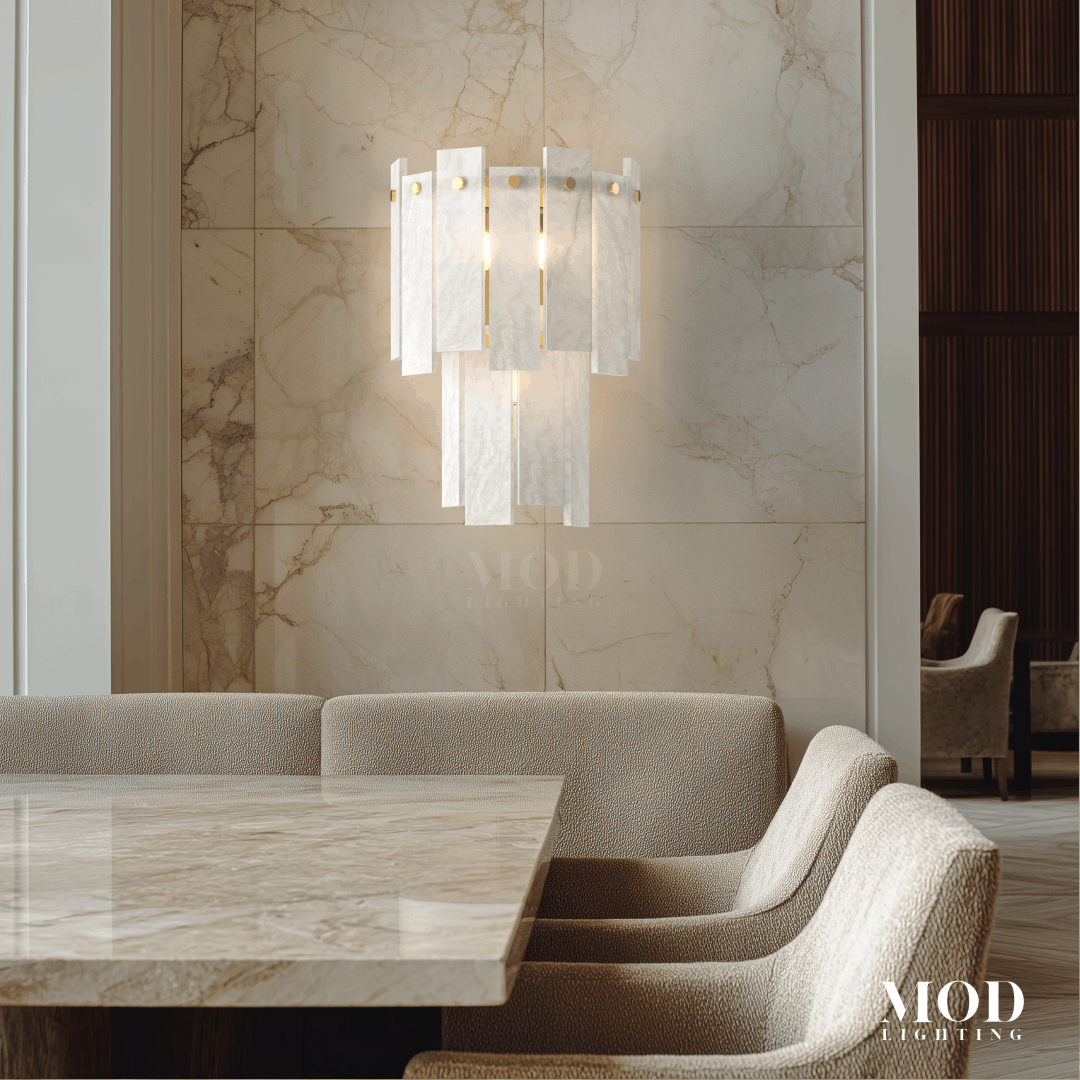
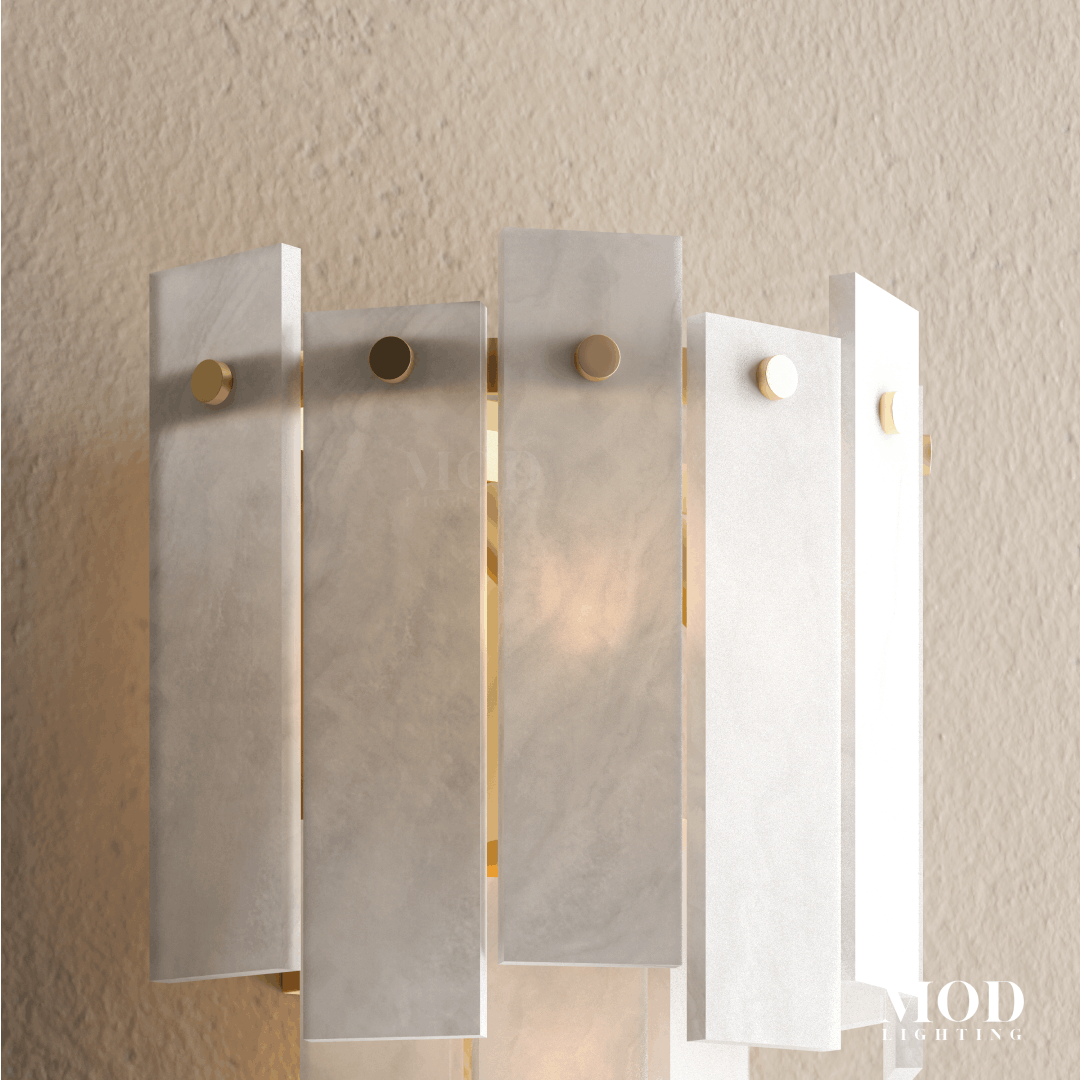
NEW ARRIVAL
Velina Sconce
From(1,974)


Frequently asked questions about Indoor Wall Lights
What size should an indoor wall light be?
How bright should wall lights be, and at what color temperature?
How high should indoor wall lights be mounted?
How do I choose a wall light finish?
What does the wall need before a light can go on it?
Overhead light shows a room; light from the side makes it feel inhabited. A wall light works at eye level, grazing texture and putting warmth where people actually look, and it is the layer homes usually skip. These indoor wall lights run from quiet hallway pieces to sculptural sconces.
Sconces, stone and linear lights
Three families, roughly. The crystal sconces are the sculptural end, 9 to 18 inches tall. The stone pieces sit beside them: four alabaster designs on brushed gold, the Alba Sconce pairing solid brass with alabaster for a warmer, stone-filtered glow, and a travertine sconce for anyone who wants mineral texture rather than sparkle. The linear LED lights are the practical end, with Cadel drawing a bar from 22 to 47 inches with remote dimming.
Height, spacing, warmth
Mount at 60 to 65 inches from floor to center, which is eye level for an adult. Beside a bed, come down to 30 to 36 inches above the mattress, and set pairs flanking a mirror 36 to 40 inches apart. A sconce at full output all evening defeats the reason it went up. Most MOD indoor lights are compatible with a standard wall dimmer, and the Dimensions & Specs tab on each product page confirms the control type.
Rooms, and where to go deeper
Hallways first, since a lit interior wall makes a corridor part of the house instead of a route through it. Bedrooms next, where a pair of sconces frees both nightstands, then living rooms, where light beside a fireplace or a picture adds the layer a lighting scheme usually misses. The modern wall sconces range carries shapes beyond this page, the long strip wall lights run the linear idea along a whole wall, and the alabaster wall sconces collect the stone pieces in one place.
Inside, the useful habit is to check for a junction box before choosing a piece, then work in pairs where symmetry offers itself.