
Types of Lighting Fixtures: A Room-by-Room Guide
September 16, 2026
Who This Is For
- Homeowners looking to explore lighting options
Key Takeaways
- Every fixture does one of three jobs: ambient, task, or accent. Most rooms are missing at least one layer.
- Chandeliers should almost always be larger than your instinct. Use the sizing formula: room length + width in feet = minimum diameter in inches.
- Pendant lights should hang lower than feels comfortable: 30 to 36 inches above a dining table surface, just above eye level in a seating area.
- Wall sconces install at 60 to 65 inches from the floor and are the most underused accent layer in residential lighting. In small rooms, they replace floor lamps without eating floor space.
- A dimmer switch on any ambient fixture is one of the highest-return investments in home lighting.
You can invest in a quality sofa, source the right rug, and hang art you love, but if the types of lighting fixtures you've chosen aren't doing their jobs, none of it looks the way it should. A flat, washed-out room is often a lighting problem.
The good news: the fix is simpler than most people expect. Understanding how different light fixtures work, what each one does, and how they work together is the foundation of every well-lit space. This guide covers all the major fixture types, how to place them, and how to layer them for rooms that actually feel the way you want them to.
The Three Jobs Every Light Fixture Does
Before you start shopping by fixture type, it helps to know that every light fixture in your home is doing one of three jobs: ambient lighting, task lighting, or accent lighting. Most rooms that feel wrong are missing at least one of these.
We explain each layer in detail in our guide to the four types of lighting. This guide is about the fixtures that do those jobs: which fixture fills which layer, where it goes, and how to combine them.
A room with only one of these layers will often feel flat. Bringing in additional layers is a great way to bring versatile design to a room.
Ceiling Fixtures
Ceiling-mounted fixtures handle the ambient layer in most rooms. They're the starting point for lighting in any particular area of your home.
Flush Mounts and Semi-Flush Mounts
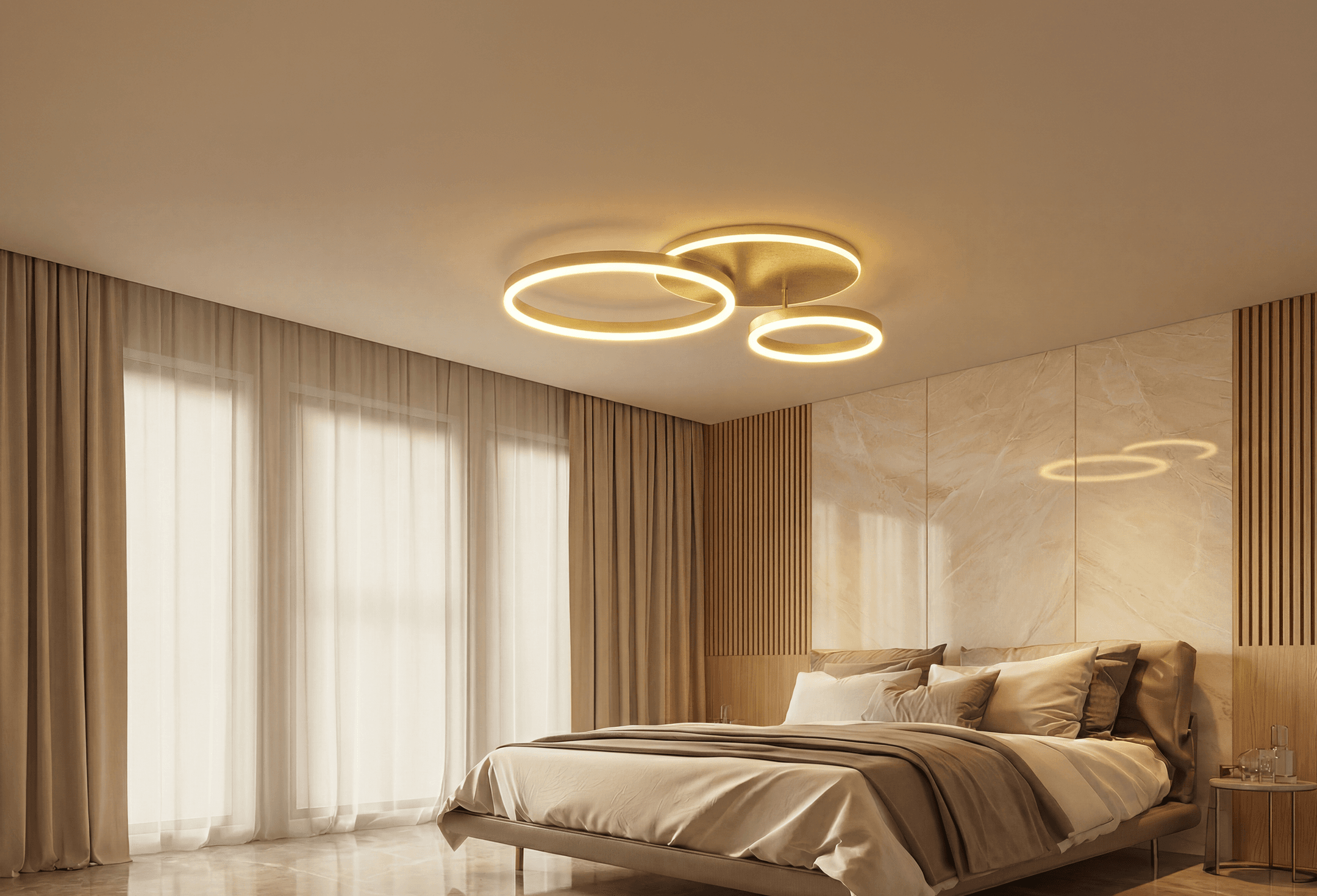
Flush mount lights sit directly against the ceiling with no gap between the fixture and the surface. They're the practical choice for rooms with ceilings under 8 feet: bedrooms, hallways, smaller rooms where a hanging fixture would feel too close.
Semi-flush mounts drop a few inches below the ceiling on a short rod or stem. They work in spaces with slightly more clearance and tend to have more visual presence than a flat disc. Both provide general illumination, and both benefit from a dimmer. Without one, you're locked into a single light level for every moment of the day. With one, you can create a versatile design that changes with the time and mood.
Neither flush mounts nor semi-flush mounts create atmosphere on their own. Pair them with floor lamps or wall sconces and the room starts to feel layered.
Recessed Lights
Recessed lights are installed directly into the ceiling, leaving only a trim ring visible. The result is clean and minimal, with no fixture competing for visual attention. These types of lights are well-suited to kitchens, living rooms, and bathrooms, and they can function as either ambient light (when arranged in a grid across a ceiling) or accent lighting (when directed at a wall, a piece of art, or an architectural detail).
One thing recessed lights can't do is create warmth on their own. Whether you're working with low or high ceilings, a room full of recessed lights produces general illumination, but it will still feel flat without fixtures at lower heights.
Professional installation is typically required for recessed lighting. The process involves cutting into the ceiling and running wiring throughout. Usually this is done in collaboration with a professional electrician.
Statement Ceiling Fixtures
These are the fixtures that define a room. They carry the most visual weight and, when chosen correctly, become the design anchor that everything else responds to.
Chandeliers
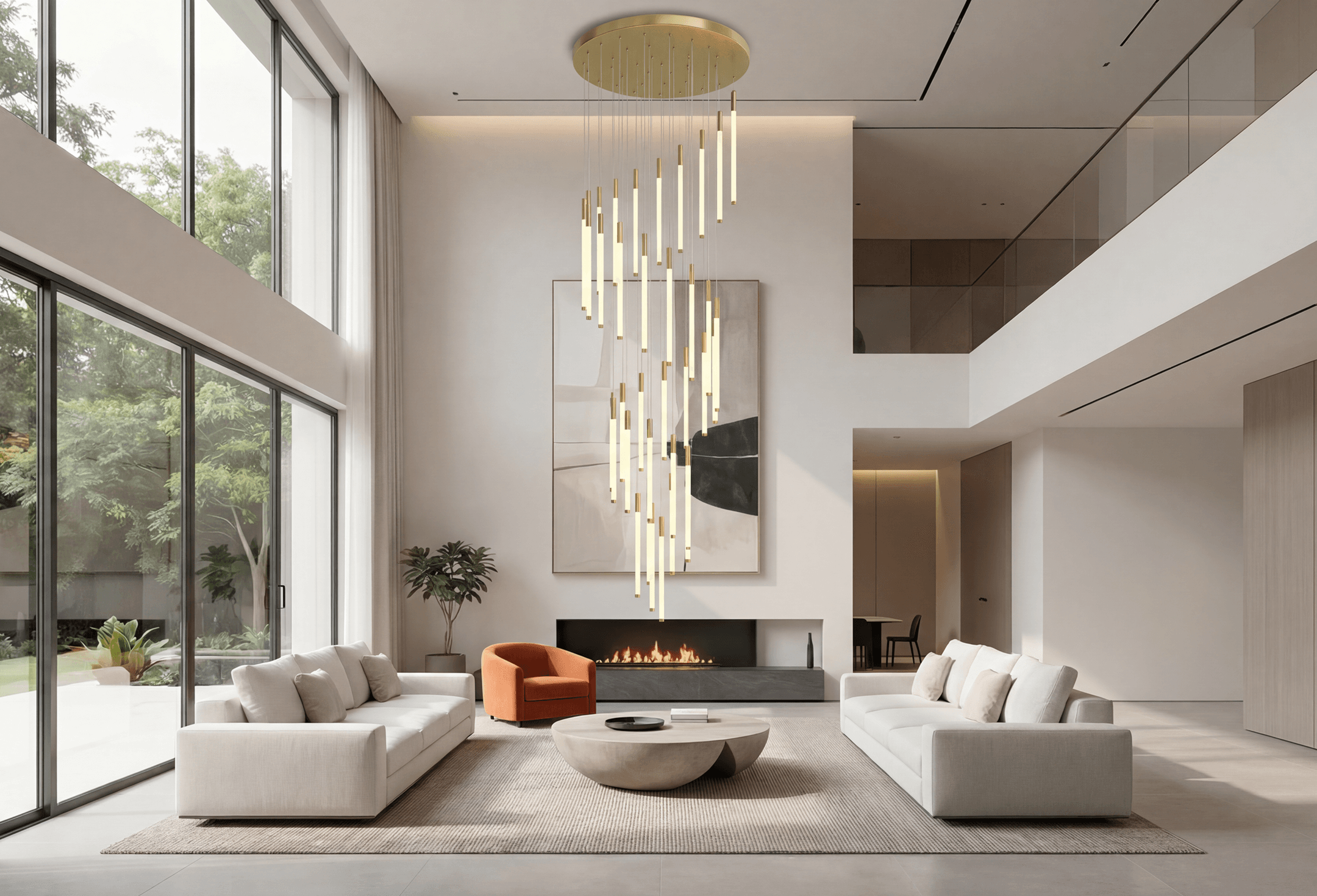
A chandelier is a sculptural presence as much as it is a light source. Multi-armed, often complex in form, it contributes to the room's design even when switched off. Chandeliers work best in larger spaces with high ceilings like dining rooms, entryways, or double-height living areas. They're best where their scale can read properly.
Sizing matters more than almost anything else. As a general rule, add the room's length and width in feet; that number in inches is a good minimum chandelier diameter. For example, a 14 x 18-foot room needs at least a 32-inch fixture. Rooms with ceilings above 9 feet should scale up further and consider a longer drop.
The most common mistake with chandeliers is choosing one that's too small. An undersized chandelier looks visually disconnected from the room. When the fixture arrives and looks larger than expected, that's usually correct. MOD LIGHTING's chandelier collection includes sculptural designs like the Kasper and Finn, built to hold their own at scale in rooms that deserve a proper statement.
Chandeliers are best suited as ambient sources in dining rooms and entryways, though they can serve as the focal point in an open living area when paired with task and accent layers below.
Pendant Lights
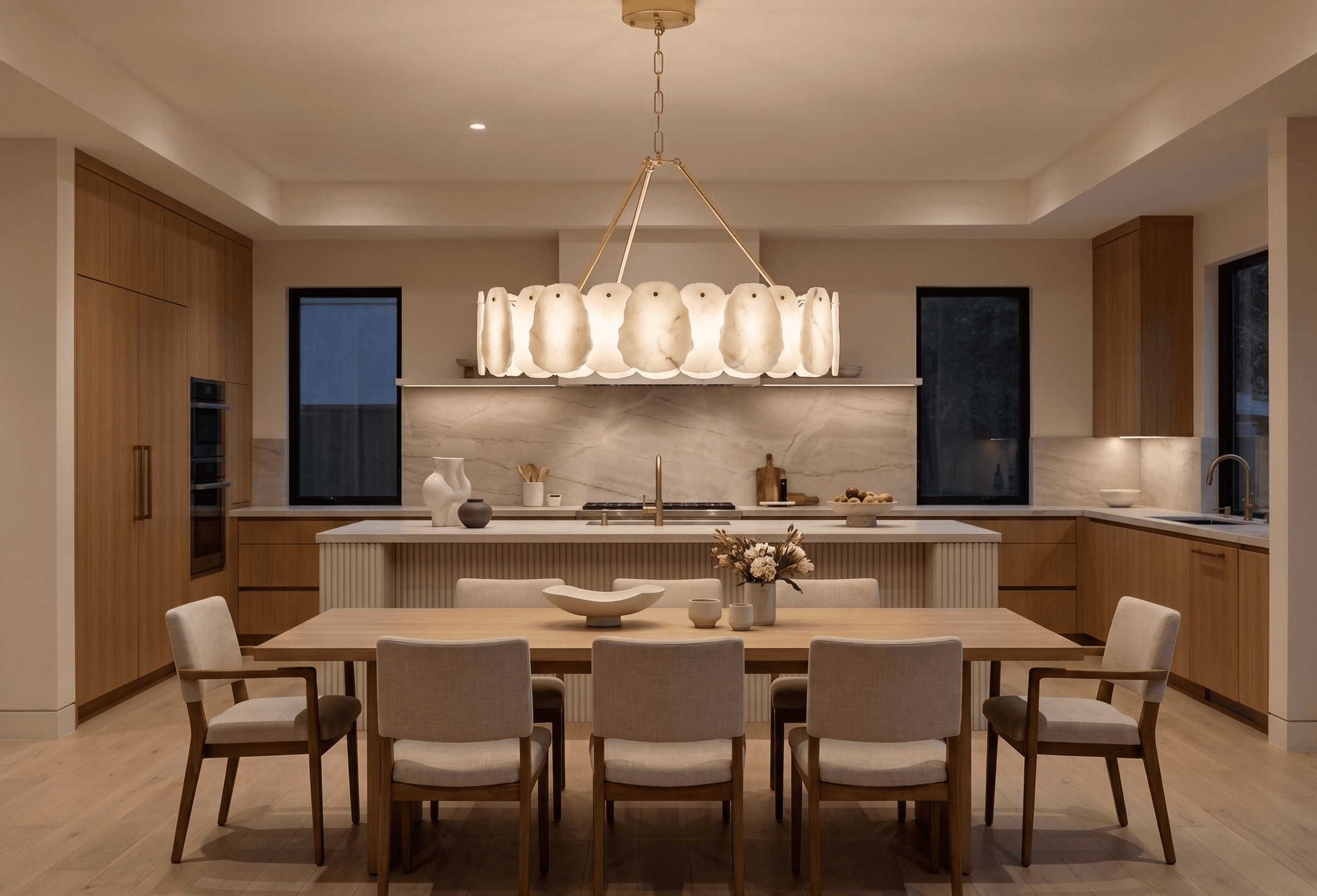
Pendant lights hang from a single cord, rod, or chain and direct light downward into a specific zone. They're among the most versatile fixtures available, effective as ample lighting over a kitchen island or dining room table, and as a decorative element in a reading nook or entryway.
Over a rectangular dining room table, a single large pendant or a row of smaller pendants works better than one centered fixture.
Linear suspensions like the Alba are purpose-built for long tables. They distribute light evenly across the surface without creating bright and dark zones. Two or three smaller pendants grouped together over an island create more visual rhythm and better coverage than one oversized globe.
Pendant lights should usually be hung lower than feels comfortable. Over a dining table, 30 to 36 inches above the surface is the standard. In a living room seating area, just above eye level when seated is the right target. Pendants hung too high lose their intimacy and their function.
Wall-Mounted and Portable Fixtures
These lights are responsible for atmosphere, and the ones most homeowners overlook, often acting as accent and task lighting.
Wall Sconces
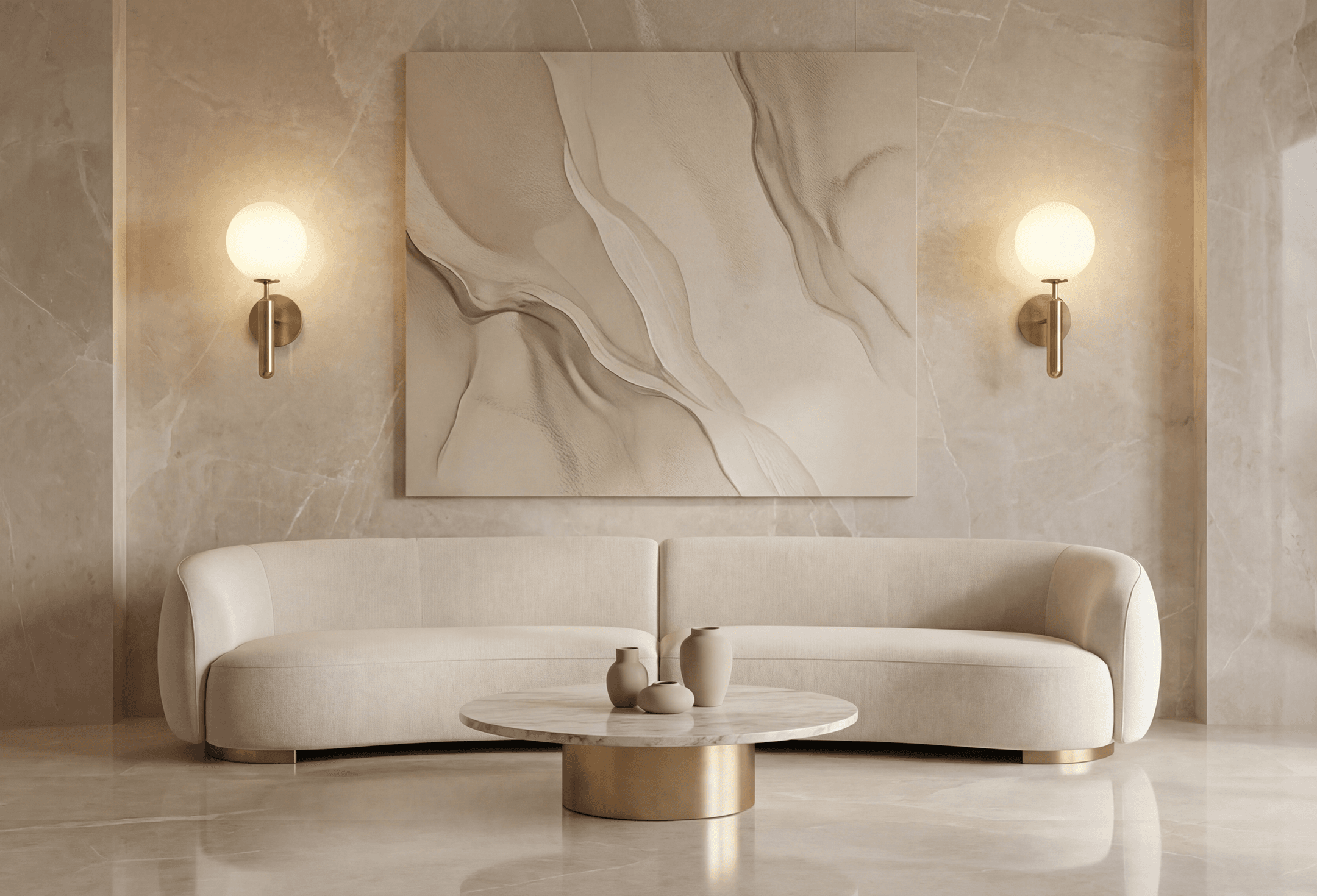
Wall sconces mount directly to the wall, which means they add a lighting layer without using any floor space. In small interior spaces, this is a genuine advantage: a wall sconce can replace a floor lamp, free up floor area, and add a more architectural detail in the process.
Sconces should be installed about 60 to 65 inches from the floor as a starting point. They can be used in pairs to flank a mirror, headboard, or piece of art. Running them along a hallway provides accent lighting between rooms.
In a living room, sconces on the side walls add the peripheral light that a centered ceiling fixture can't reach. The corners and edges of a room are where atmosphere is actually made. A wall sconce in the right spot changes the entire feeling of a space.
Floor Lamps
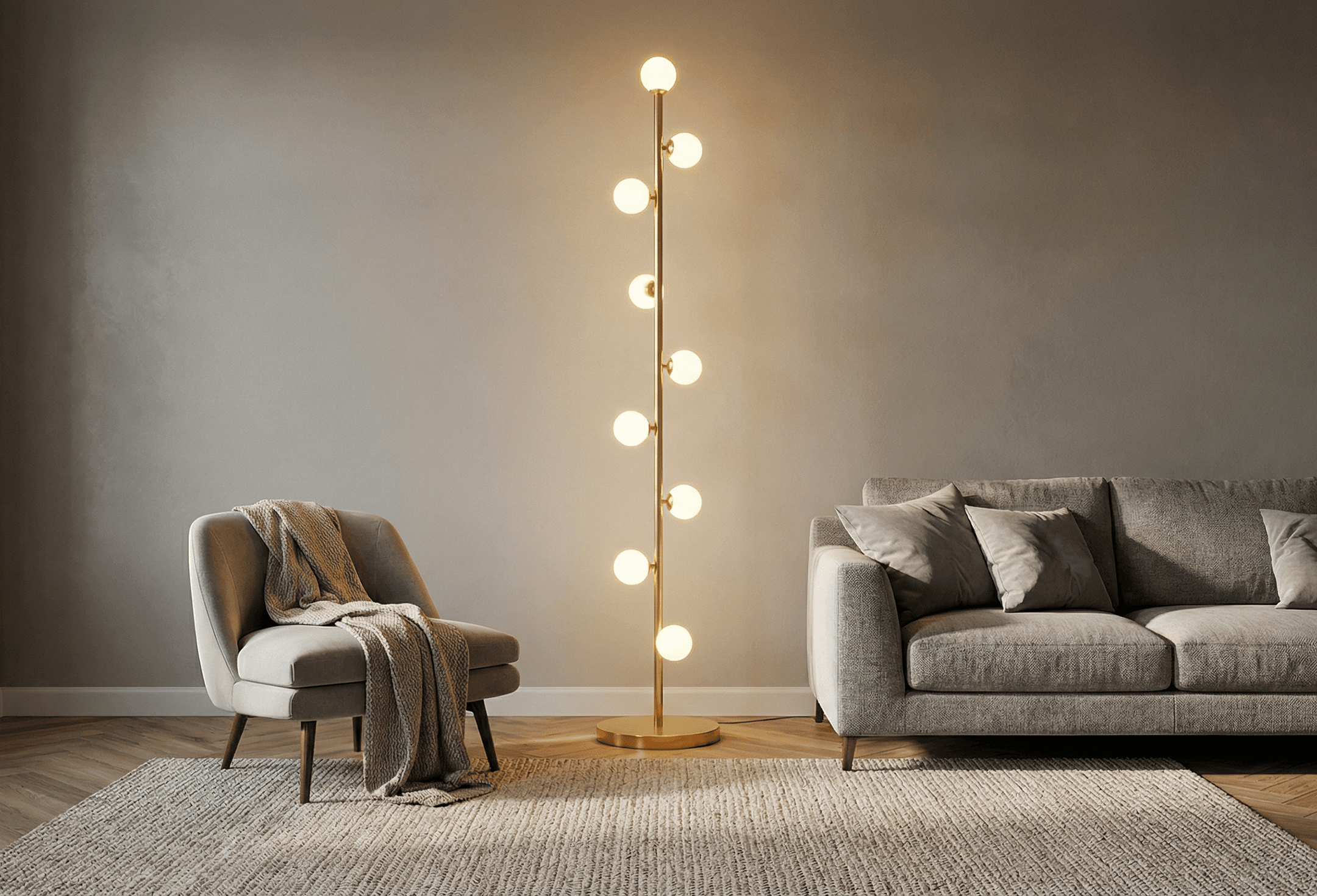
Floor lamps are the easiest way to add a second lighting layer to any room. No installation, no electrician, no commitment! Just plug in and position. The corner is where a floor lamp does its best work: filling the peripheral light that overhead fixtures leave dark and creating the warmth the room is missing.
An upward-facing floor lamp adds indirect ambient light by bouncing off the ceiling and walls. A downward-facing shade provides task lighting for reading. Both are useful; which you choose depends on what the room already has.
Track Lights
Track lighting consists of multiple adjustable heads mounted on a single hardwired track. Each head can be aimed independently, which makes track lights particularly useful for accent lighting on art, architectural details, or specific zones in an open-plan kitchen.
In terms of aesthetics, track lights are more utilitarian than sconces or pendants. They work best in spaces where that flexibility is the priority. In a kitchen, you may need to light both the counters and the walls, or highlight a hallway with art. In a living room, they tend to read as functional rather than designed, so placement matters.
Architectural and Specialty Fixtures
Cove Lighting
Cove lighting is an indirect lighting application where the fixtures are hidden behind a ledge, crown molding, or ceiling recess, and the light they produce reflects off the ceiling or wall rather than shining directly into the room. The result is an ambient glow with no visible light source: soft, even, and particularly effective for textured walls or coffered ceilings where the reflected light adds depth to the surface.
Cove lights are often used in bathrooms as accent lighting and in living rooms to supplement overhead sources. They don't provide focused illumination but raise the overall light level and change the mood of the room without drawing attention to themselves.
Picture Lights
Picture lights are small fixtures mounted directly above artwork to draw attention to a specific piece. They can be hardwired or plug-in, and they function as a precise form of accent lighting: targeted, contained, and effective at creating a focal point on a wall that might otherwise read as flat.
Desk Lamps and Landscape Lighting
Desk lamps provide direct light for computer work, reading, or detailed tasks. An adjustable arm gives you control over exactly where the light falls. This is especially useful in a home office where task lighting needs to follow your work surface rather than stay fixed.
Landscape lighting handles the exterior: path lights guide movement safely along walkways, spotlights highlight trees or architectural details on a facade, and step lights handle stair safety. For any outdoor space that gets used after dark, landscape lighting does the same layering work as interior fixtures in your outdoor space.
Selecting Color Temperature
Every fixture type in this guide depends on one factor most people never think about: color temperature. Measured in Kelvin, color temperature determines whether your light reads as warm and amber or cool and clinical. This affects how a room's style feels more directly than almost any fixture choice.
2700K is the standard for living rooms, dining rooms, and bedrooms. It's rich and amber-toned, flatters skin and interiors, and gets warmer as it dims, moving toward candlelight. If you're installing dimmable LED bulbs in evening-focused spaces, 2700K is the right starting point.
3000K is slightly crisper. It works well in contemporary spaces or in task zones within a living room where you want a bit more clarity without tipping into cool territory.
4000K and above is for kitchens (task areas specifically), bathrooms, and home offices. Never use it in a living room, dining room, or bedroom. Cool white light at those temperatures produces a blue-toned output that reads as clinical and undermines the effect of even the most considered fixture choice for living rooms, dining rooms, and bedrooms.
How to Layer Fixtures in Any Room
With the basic types of fixtures in place, the last step is knowing how to combine them for each room's layout.
Living Room
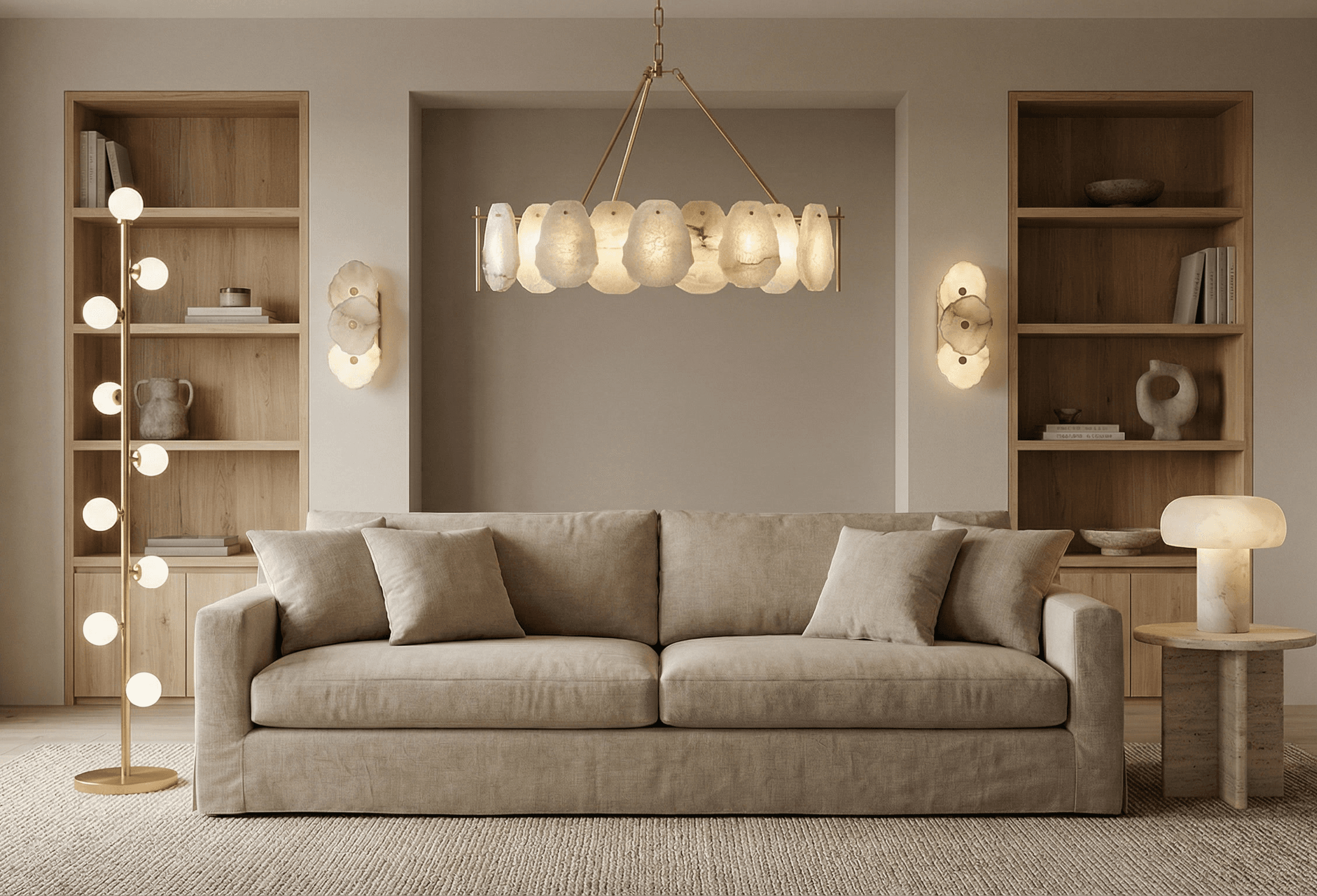
In a living room, start with a statement ceiling fixture on a dimmer as your ambient layer. Add floor lamps in the corners for accent light. A table lamp or reading lamp beside a seat completes the task layer. Three fixture types, three layers, one room that actually feels right.
Dining Room
In a dining room, a chandelier scaled to the table is the anchor. Use the sizing formula: length plus width of the room in feet equals minimum diameter in inches. Put it on a dimmer. If the room has the wall space, wall sconces add the peripheral layer.
Kitchen
In a kitchen, recessed lights handle general coverage. Pendant lights or a linear suspension over the island provide task lighting directly where food preparation happens. Undercabinet lighting adds a third layer that's both functional and warm.
Bedroom
In a bedroom, a ceiling fixture plus bedside table lamps is the baseline. Wall sconces beside the bed work even better in smaller rooms as they free up surface space and add a more architectural detail at exactly the right height.
Small Rooms
In any small room, favor wall-mounted fixtures over portable ones wherever possible. They add layering without consuming floor space in rooms where every square foot counts.
Find the Right Fixtures for Your Space
Lighting a room well starts with knowing which layer is missing and choosing a fixture that fills it. Start with the ambient layer, then add task and accent sources until the room has depth at multiple heights.
MOD LIGHTING's collections span every fixture type in this guide: statement chandeliers built to anchor a room, pendant lights designed for dining tables and kitchen islands, and wall sconces that earn their place as architectural details rather than afterthoughts. Explore the full range to find fixtures that work as hard as they look, or contact the team for guidance on building out the right layers for your space.