Scandinavian lighting was engineered before it was styled. In Scandinavia the winter sun barely clears the roofline, so the tradition builds a room from several small, warm sources instead of one bright one overhead. The calm the style is known for is a side effect of solving a real problem.
What Scandinavian lighting looks like
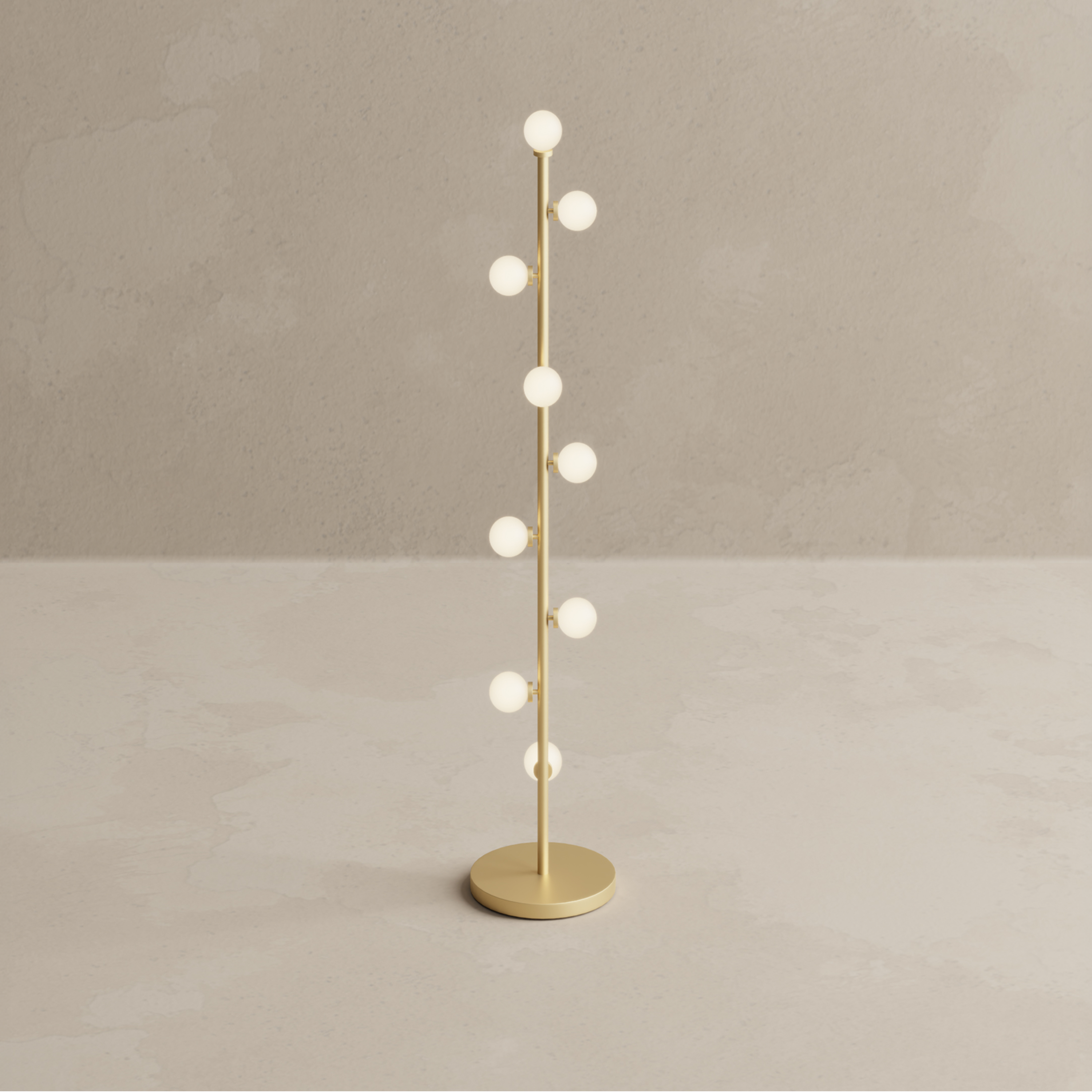
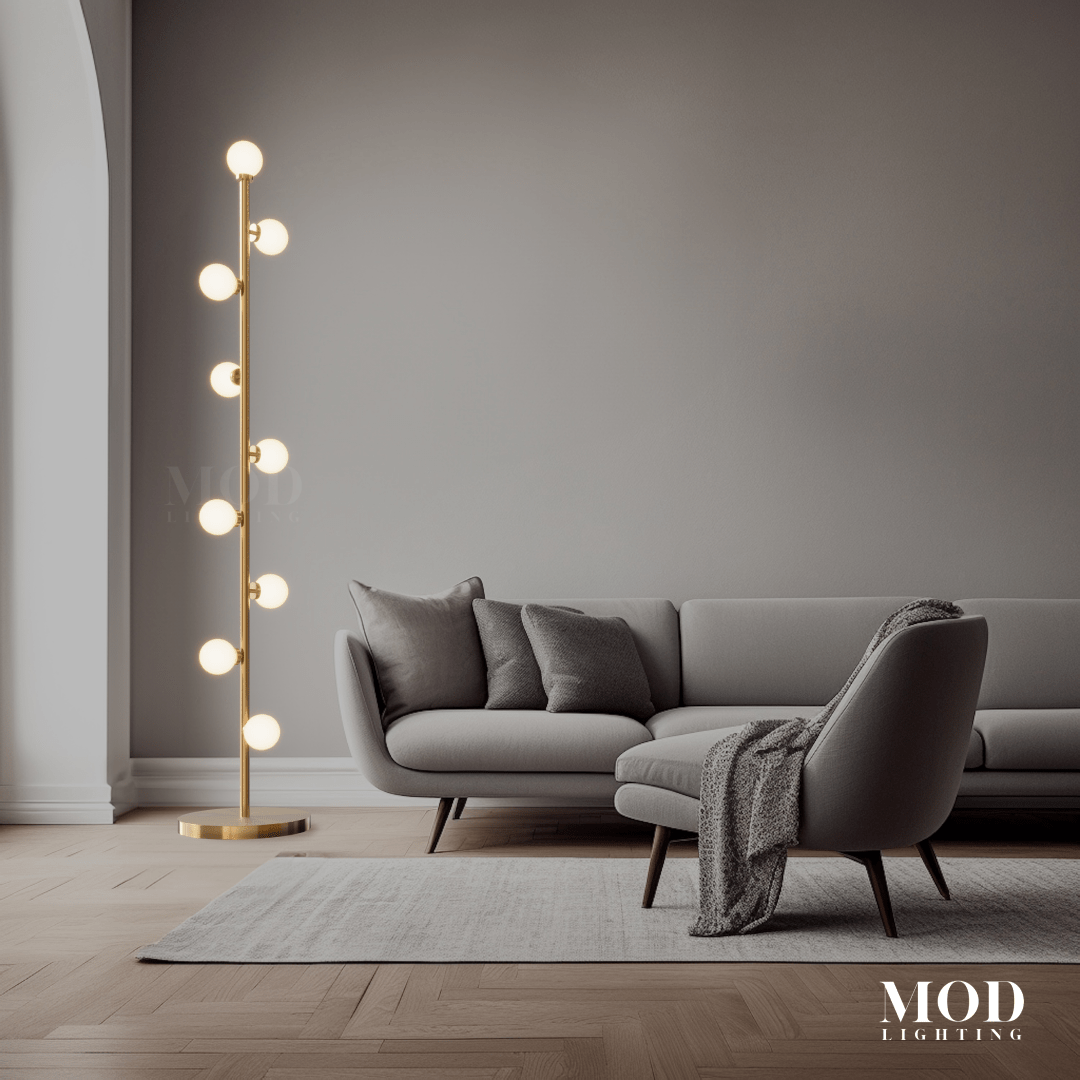
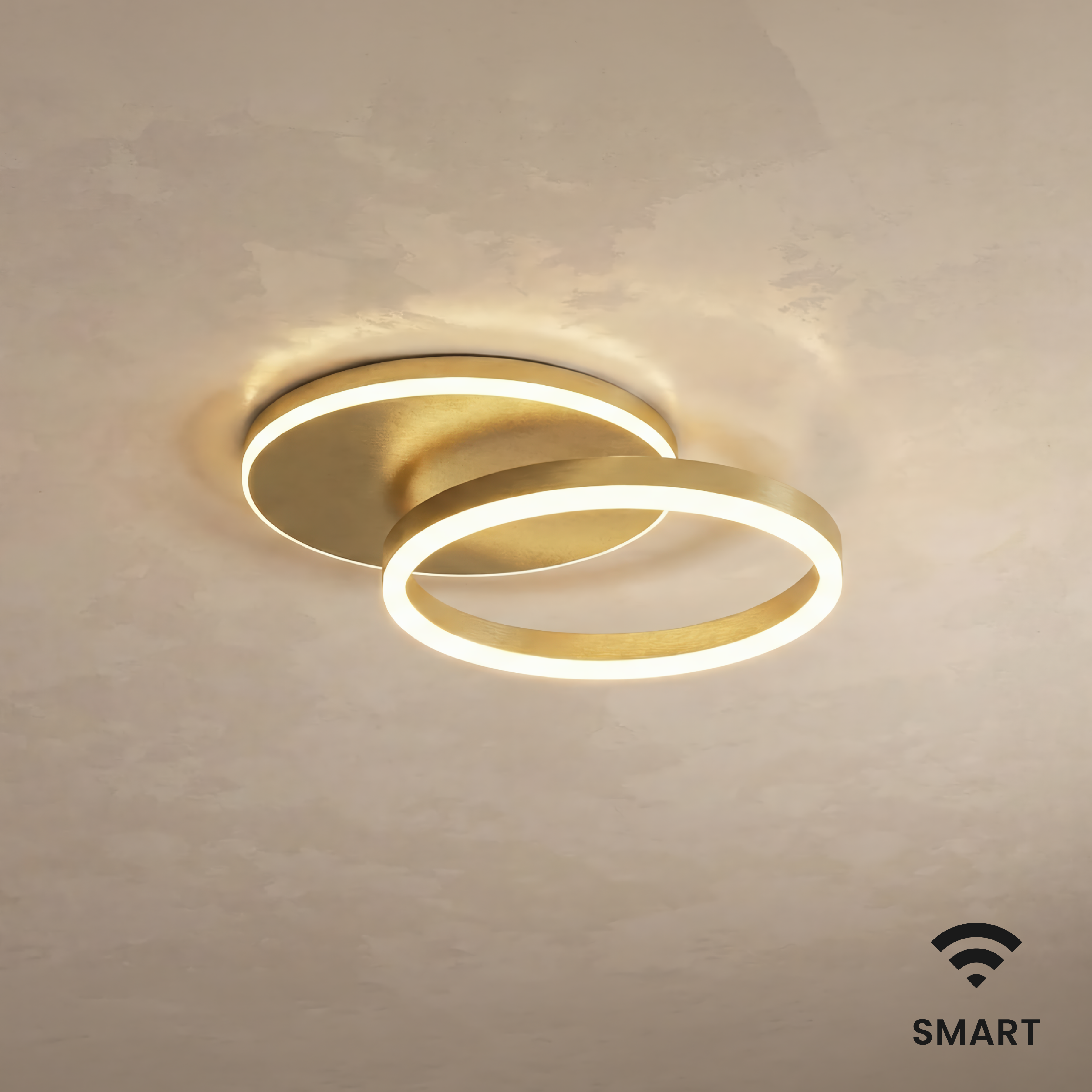
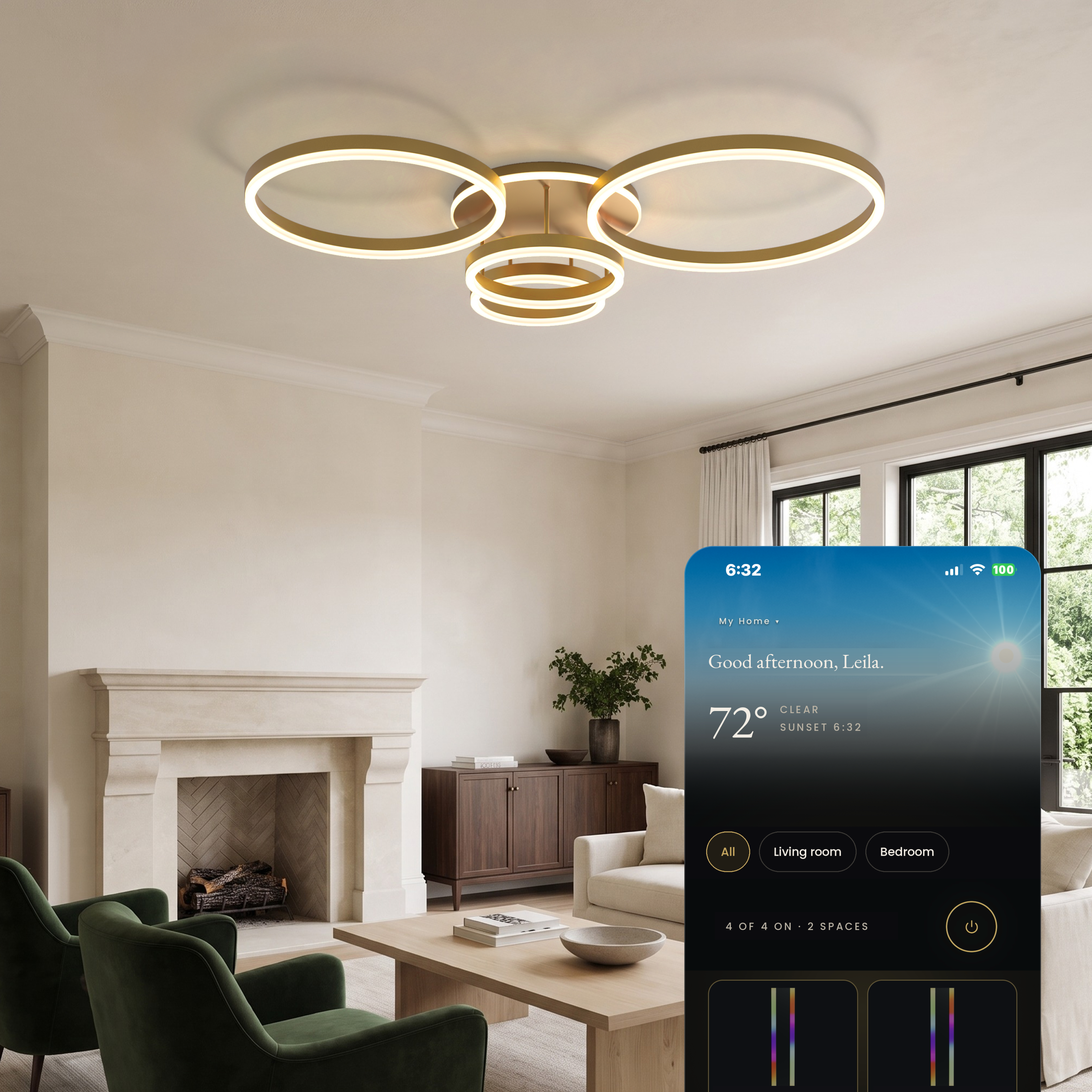
Clean lines, natural materials and warm, diffused light, out of the Swedish, Norwegian and Finnish design tradition. Bailey is the signature, a Nordic chandelier of seven or ten glass orbs on a black iron frame, with Mirella carrying the same idea in solid brass and glass. Chloe rings two to six circles of light, and Luka keeps the pendant to a single clean bar in aluminum, acrylic and wood. The Pearl floor lamp sets frosted glass on a gold-finished stem, and the boho chandeliers push the material story furthest, brass frames wrapped in hand-knitted bamboo or hemp rope.
Building the layers
Plan a living room as three to five separate sources rather than one: a ceiling piece for the ambient layer, a wall or table light for task, and a lamp in the corner the ceiling does not reach. Hang pendants 30 to 36 inches above a table and mount wall lights at 60 to 65 inches. The fixtures here all emit warm white at 3000K, which is the temperature the style depends on.
Rooms, and the range around the style
Kitchens and dining rooms take the style most easily, a chandelier or pendant over the table and task light where the work happens, and a bedroom benefits from low, warm layering more than any other room. The palette stays neutral, white, grey, beige and black, with wood, brass and stone accents. Arabella works yellow travertine into the same language. Beyond this page, the modern LED ceiling lights cover the ambient layer indoors, and the table and floor lamps fill the corners.
Give the room where winter evenings actually happen its layers first, then extend one warm source at a time.
.svg&w=64&q=75)
.svg&w=64&q=75)


