
High-End Outdoor Lighting: How to Design an Exterior That Works After Dark
September 16, 2026
Who This Is For
- Homeowners planning an outdoor lighting upgrade who want results that go beyond security basics
- People looking for guidance on fixture sizing, color temperature, materials, and zone-by-zone planning for their home's exterior
Key Takeaways
- Treat your exterior as a design system with distinct zones: entryways, walkways, patios, and gardens each need a different approach
- The same layering principle that applies indoors (ambient, task, accent) applies outside
- Front door sconces should be 16 to 20 inches tall for a standard door; warm white at 2700K keeps the entry welcoming
- Mixing warm and cool reads as unplanned
- IP ratings and material quality determine how long outdoor fixtures actually last
The exterior of your home gets evaluated twice: once in daylight, once at night. Most homeowners put real thought into the daytime version and leave the nighttime to chance. A front door that looks considered at noon can look flat and uninviting at 9 p.m. High-end outdoor lighting closes that gap. It adds security and safety, but the real function is atmosphere.
A well-lit exterior feels intentional well into the evening. It extends the feeling of the interior outward and makes your home look like it was designed with the dark in mind. Here's how to approach it zone by zone in your home.
Approach Your Lighting in Zones
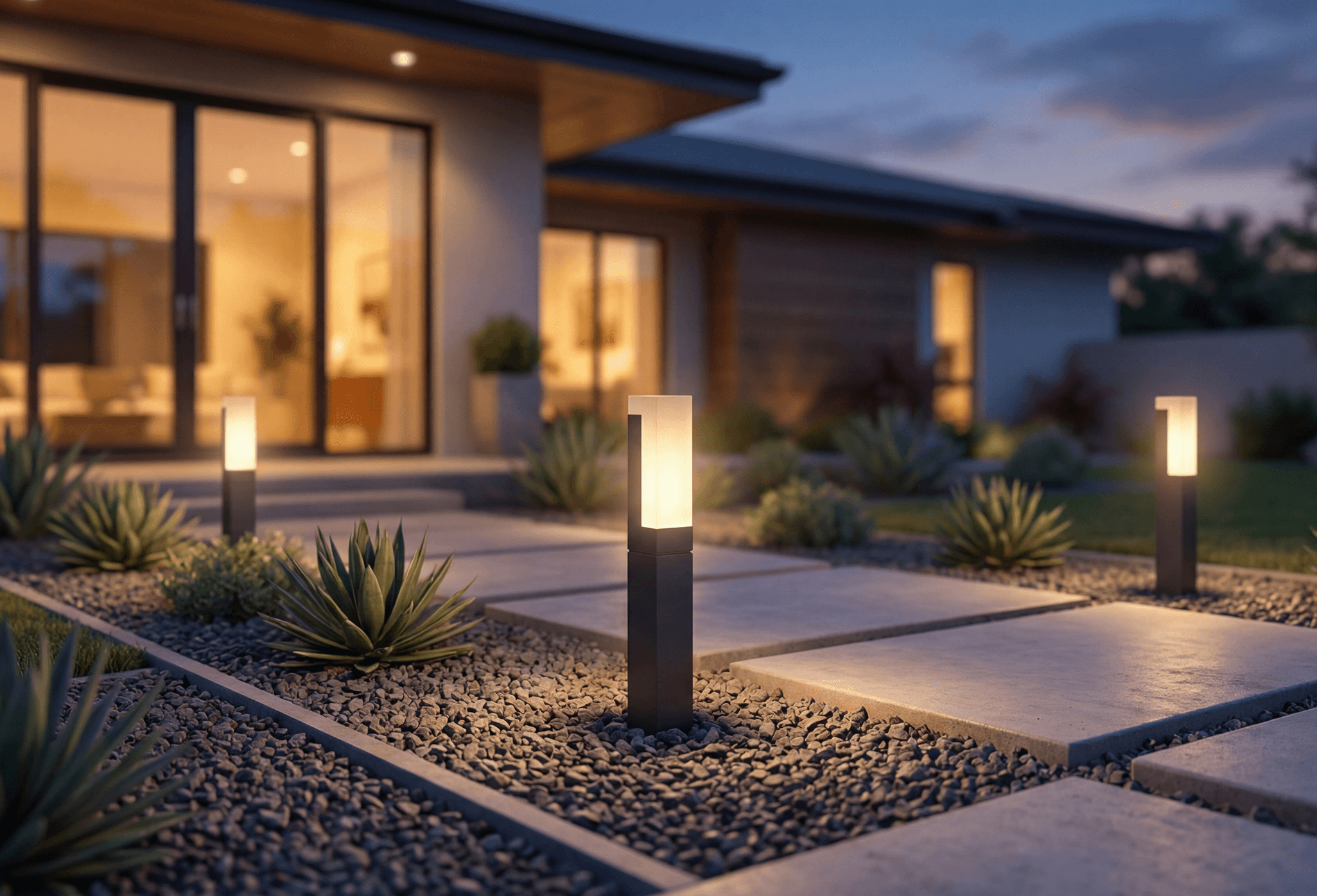
Most homeowners treat outdoor lighting as a security problem. They place a fixture by the front door, maybe one over the garage, and call it done. High-end outdoor spaces don't work that way. The outdoor environment needs to be thought through the same way you'd plan a living room.
Like a home's interior, your exterior space has zones: the front door and entry approach, walkways and driveways, patios and covered outdoor living areas, and garden or landscape beds. Each zone serves a different purpose. Entryways need presence and warmth. Walkways need enough light to move safely without turning the path into a runway. Patios need atmosphere, as this is where you'll actually spend time after dark, so the lighting should feel as considered as the furniture.
The same lighting principles that you use indoors apply here, so the four types of lighting work together in each zone. Ambient light sets the baseline. Task lighting handles safety and function. Accent lighting does the design work, drawing the eye to the architecture, the plantings, the hardscape. Miss any layer and the exterior feels incomplete, even if you can't immediately say why.
Matching Fixtures to Outdoor Areas
The right outdoor lighting fixtures can greatly enhance each of your outdoor spaces.
Front door and entryways
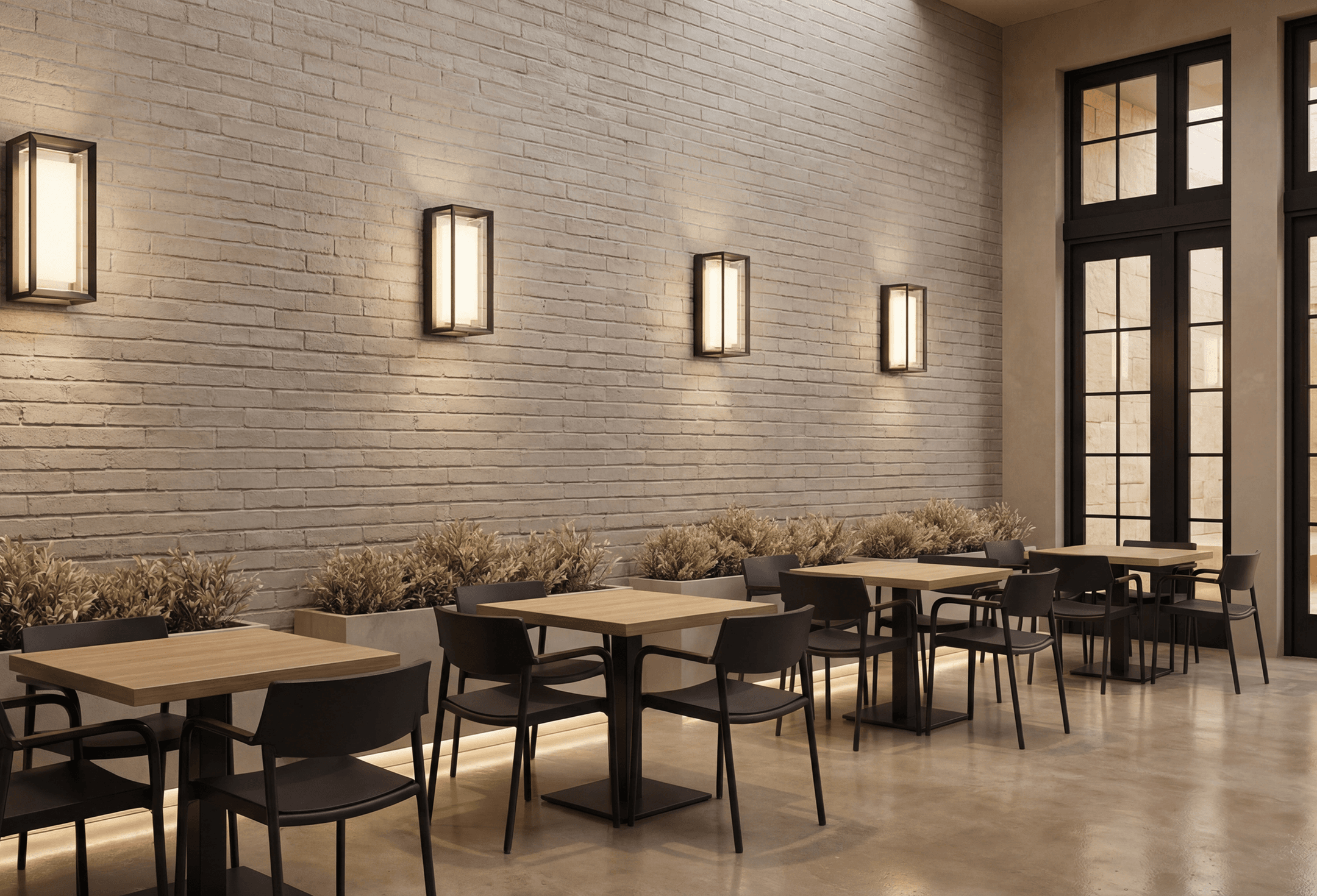
Flanking the front door with a pair of outdoor wall sconces is the single most effective upgrade you can make to your home's exterior. When it comes to sizing, a small wall sconce may look like an afterthought, while an overly large fixture can feel mismatched. Aim for a height roughly one-third the height of your door. For a standard 80-inch door, that would be about 16 to 20 inches.
Color temperature matters just as much as size. Warm white light around 2700K is a great choice for entryways. It keeps the entry welcoming and soft. Cool white bulbs at 4000K or above push the front door into office-lobby territory, which is the opposite of what high-end outdoor lighting should accomplish.
Our Solen wall sconce brings exactly this kind of considered presence to an entry: a clean, architectural silhouette that reads well in daylight and casts warm, even light after dark.
Patios and covered outdoor living
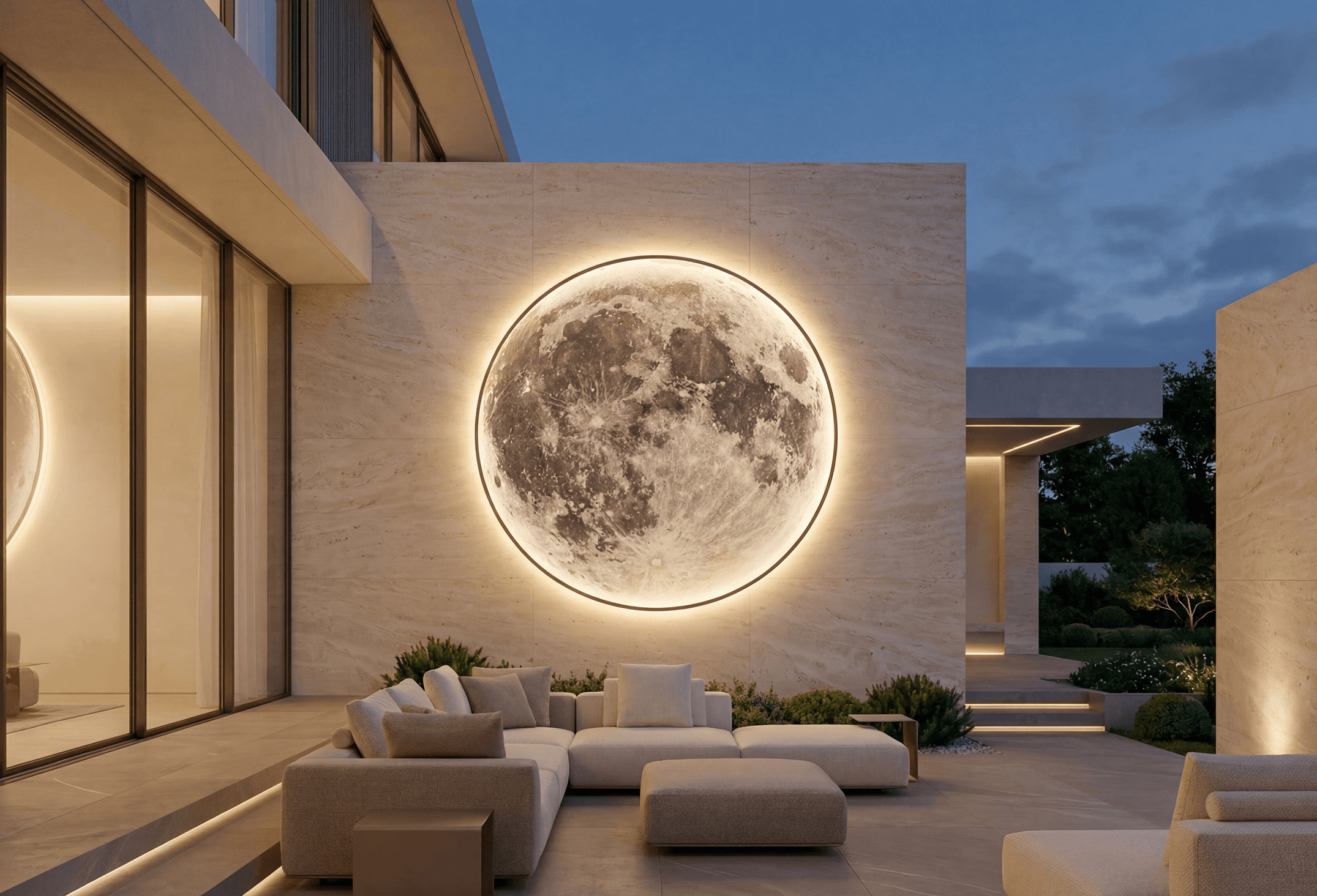
If there's an overhead structure in your outdoor space like a pergola, covered deck, or ceiling above an outdoor dining area, pendant lighting or a ceiling fixture anchors the space.
Aim to direct the light downward. Fixtures that throw light outward or upward create glare and contribute to light pollution in the surrounding nighttime environment.
A dimmable fixture in this zone is also non-negotiable. The setting for a dinner party and the setting for reading alone outside are completely different, and a fixture that can't be adjusted locks you into one mood for both.
Walkways and gardens
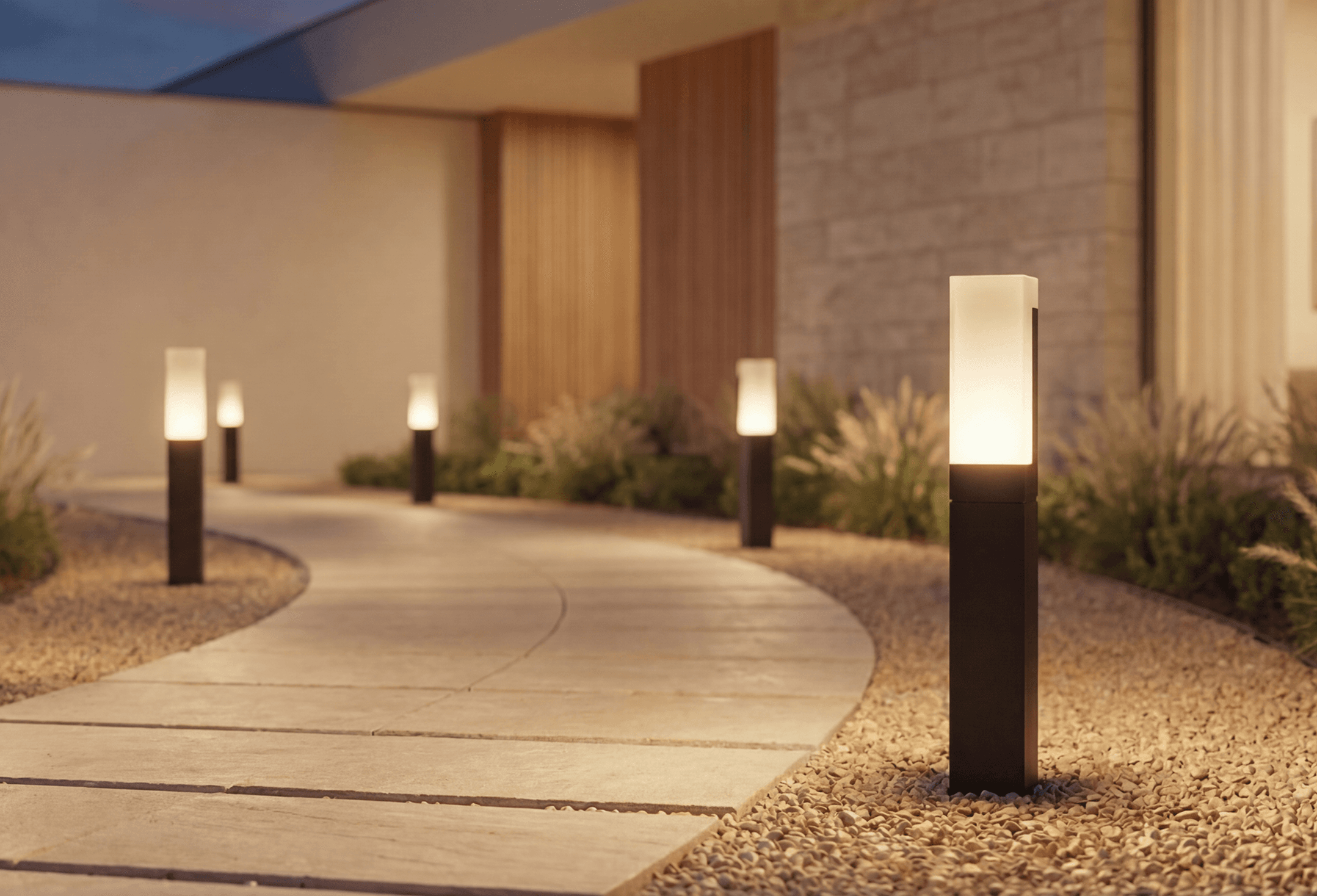
Path lights handle the safety function along walkways and driveways. In-ground well lights or low-profile accent fixtures highlight planting beds, garden features, and architectural elements at ground level.
Keep color temperature consistent across all zones. Mixing warm and cool fixtures across the same exterior reads as unplanned, regardless of how good each individual fixture is.
Materials and Finishes That Last Outdoors
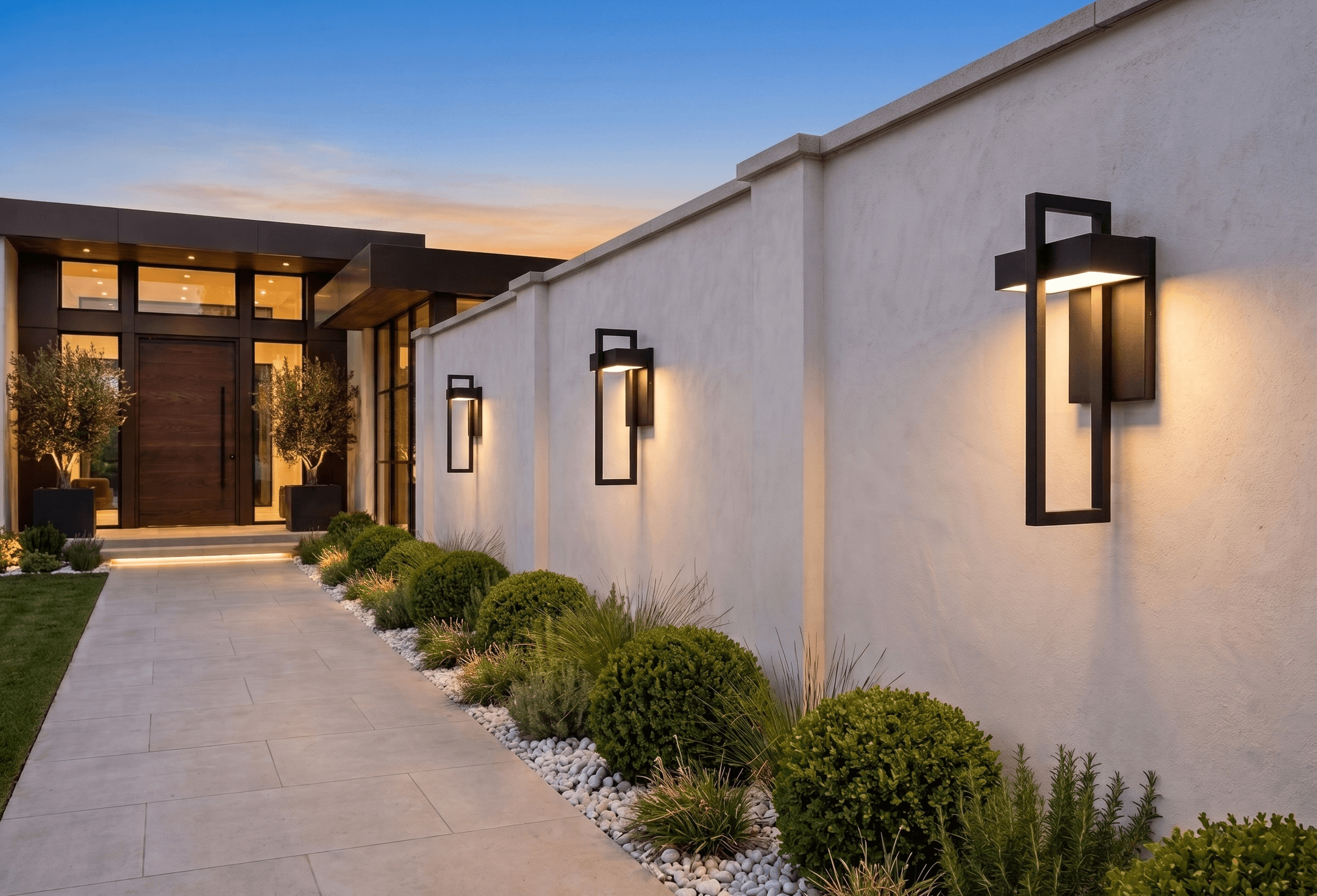
High-end outdoor lighting is built to a different standard than interior fixtures. Marine-grade brass, powder-coated aluminum, and weather-resistant glass are the materials that hold up to years of exposure. An IP rating tells you what a fixture can handle: wet-location rated fixtures belong anywhere rain can reach them directly; damp-location rated fixtures work under covered patios and protected overhangs.
Finish choices matter beyond aesthetics. Antique brass, matte black, and warm grey hold up against exterior architecture. They age well and resist the chalking and pitting that cheaper painted finishes develop within a season or two.
The maintenance reality with quality fixtures is minimal: clean glass lenses a few times a year, check seals annually, touch up finishes if needed. With standard outdoor fixtures, the maintenance reality is replacement.
Smart Controls and Security
Motion sensors and dusk-to-dawn scheduling are a good practical baseline for illuminating your outdoor space. To make sure everything is well-lit, position motion sensors to cover driveways and the full entry approach rather than just the front step. Floodlights that only turn on when guests are already at the door aren't doing much for security or safety.
Beyond that, smart integration has become a genuine design tool for outdoor lighting. Scheduling and scene control let you set a warm ambient glow for an outdoor dinner and switch to a brighter, more functional output when you need visibility for a task. The same principle that makes smart lighting valuable indoors applies outside. A fixed output is a compromise.
Downward-directed fixtures and shielded optics are worth specifying for any high-end outdoor lighting installation. They protect the nighttime environment, eliminate glare for neighbors, and concentrate the light where it actually needs to go.
Ready to design your exterior properly?
Explore MOD LIGHTING's outdoor collection of wall sconces, path lights, and ceiling fixtures built for modern exteriors. Browse the full outdoor lighting range and find the fixtures that fit your home's architecture, your zones, and the atmosphere you're after.