
Blog > Buying Guides > Pendant Lighting Guide
How to Choose Pendant Lighting: A Complete Buying Guide
July 18th 2026 | 13 Minute read
Pendant lighting is one of the most flexible fixture categories in a home and one of the easiest to get wrong. The same basic form, a single light source suspended from the ceiling, has to answer completely different questions depending on where it hangs: over a kitchen island it's a task light with strict spacing rules; over a nightstand it's a space-saving alternative to a table lamp; in an entryway it might be the only decorative element in the room. This guide covers the decisions that apply across all of those settings: how to size a pendant, how high to hang it, how to choose between a single fixture and a cluster, and how to match style and finish to the room around it. Browse the MOD pendant lighting collection to see current fixtures with full dimensions on every product page.
Who This Is For
- Homeowners choosing pendant lighting for a specific room for the first time
- Anyone replacing a flush mount or dated fixture with something more considered
- Buyers unsure whether a room needs one pendant or several
- Design-conscious homeowners narrowing down style, finish, and scale
Key Takeaways
- Pendant type should match the job: task light, ambient fill, or pure statement
- A single pendant should be sized to the surface below it, not the room
- Standard hanging height is 30 to 36 inches above a table, higher over walkways
- Kitchen islands follow their own sizing and spacing rules, covered in a dedicated guide
- Warm white (2700K–3000K) suits nearly every pendant application in the home
- Always confirm dimmer compatibility before buying
Why Pendant Lighting Deserves a Considered Choice
A pendant is rarely just a light source. Suspended at eye level or just above it, a pendant is one of the few fixtures in a home that gets looked at directly rather than simply overhead, which means its shape, material, and finish carry more design weight than a flush mount or recessed light ever will. Choosing well means balancing that visual role against the practical one: how much light the space actually needs, and where that light needs to fall.
The Six Types of Pendant Lighting
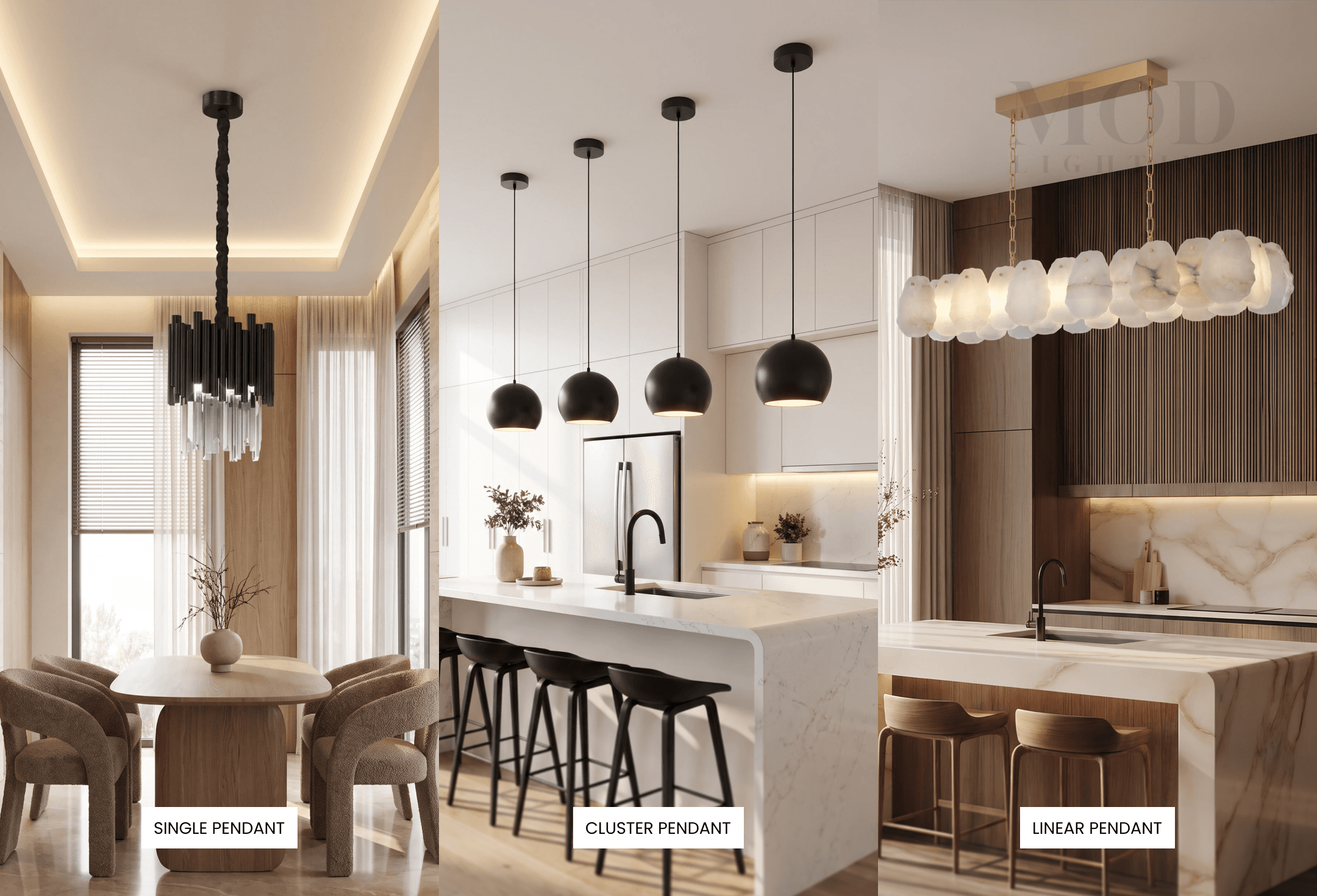
Pendant lights fall into six broad categories, each suited to a different function. Knowing which category you need narrows the field considerably before style enters the conversation at all.
| Pendant Type | Best For | Typical Placement |
|---|---|---|
| Single pendant | A focused statement over a small table, desk, or nightstand | Entryway, bedside, breakfast nook |
| Multi-light / cluster | Distributing light across a wider surface with visual rhythm | Kitchen island, long dining table |
| Inverted / up-light | Bouncing soft, indirect light off the ceiling | Living rooms, reading corners |
| Downlight / bell-shaped | Directional task light aimed straight down | Kitchen counters, workspaces |
| Drum-shade | Soft, diffused ambient light with a mid-century feel | Living rooms, dining rooms |
| Linear | Even coverage along a long, narrow surface | Islands, rectangular dining tables |
Where Pendant Lighting Works in Each Room
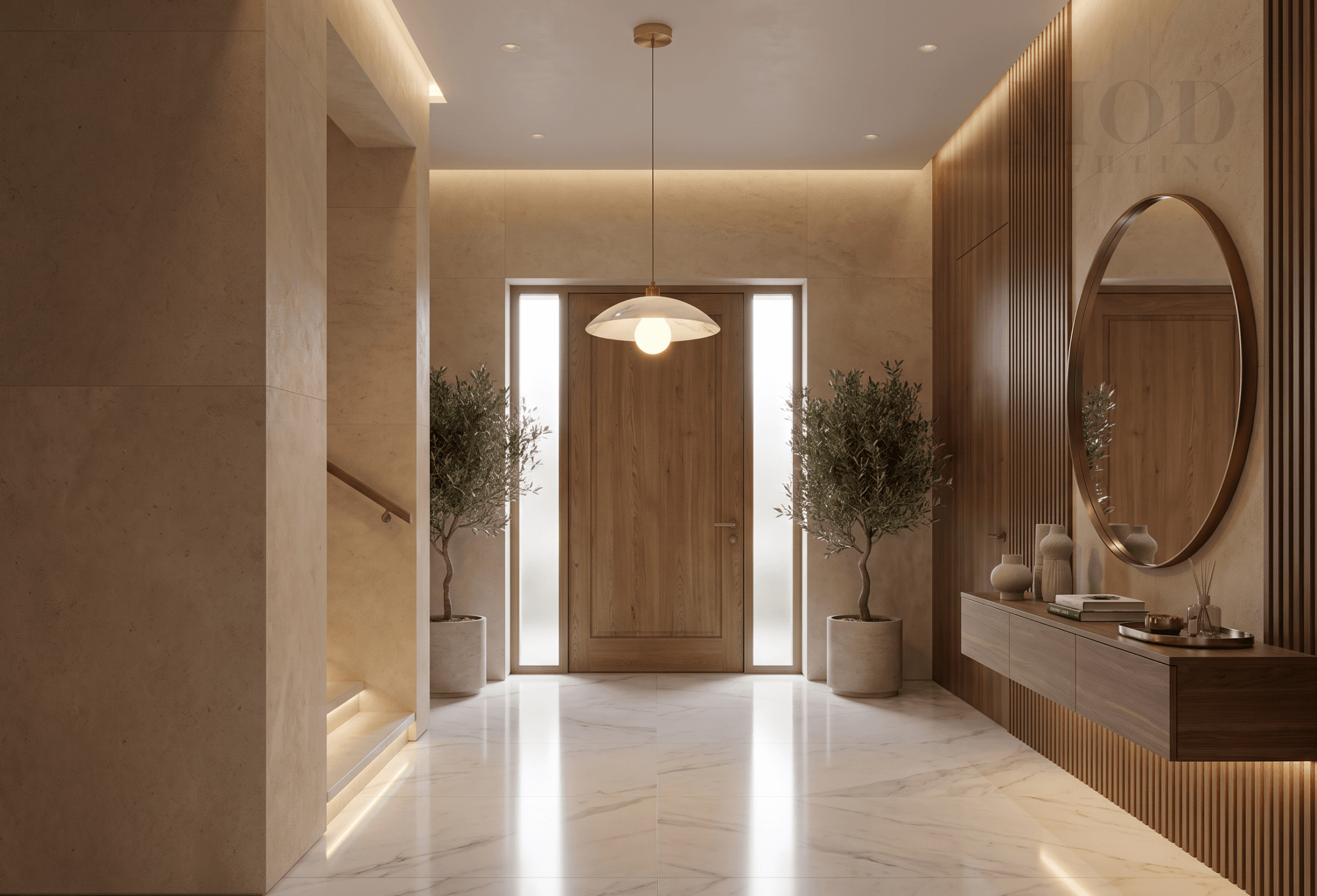
Pendants work in almost every room, but the right type and scale shift with the setting. A single crystal pendant like Zira reads as a jewelry-like accent beside a bed or in a small entryway, while the same fixture would look lost above a long dining table. As a general guide: entryways and small dining nooks suit a single statement pendant; kitchen islands and long tables suit a cluster or linear format; bedrooms and reading corners suit a single pendant sized to clear the surface it hangs over without crowding it. Kitchen islands have their own detailed sizing and spacing rules, since task lighting for food preparation is a stricter requirement than ambient or accent lighting elsewhere in the home. If that's the room you're shopping for, our kitchen pendant lighting guide covers island length, pendant count, and spacing in full.
How to Size a Pendant Light
Pendant size is judged against the surface it hangs over, not the room as a whole. A pendant that looks proportional in a showroom photo can look undersized or oversized the moment it's installed above your specific table, counter, or nightstand.
Single pendant over a small table or nook
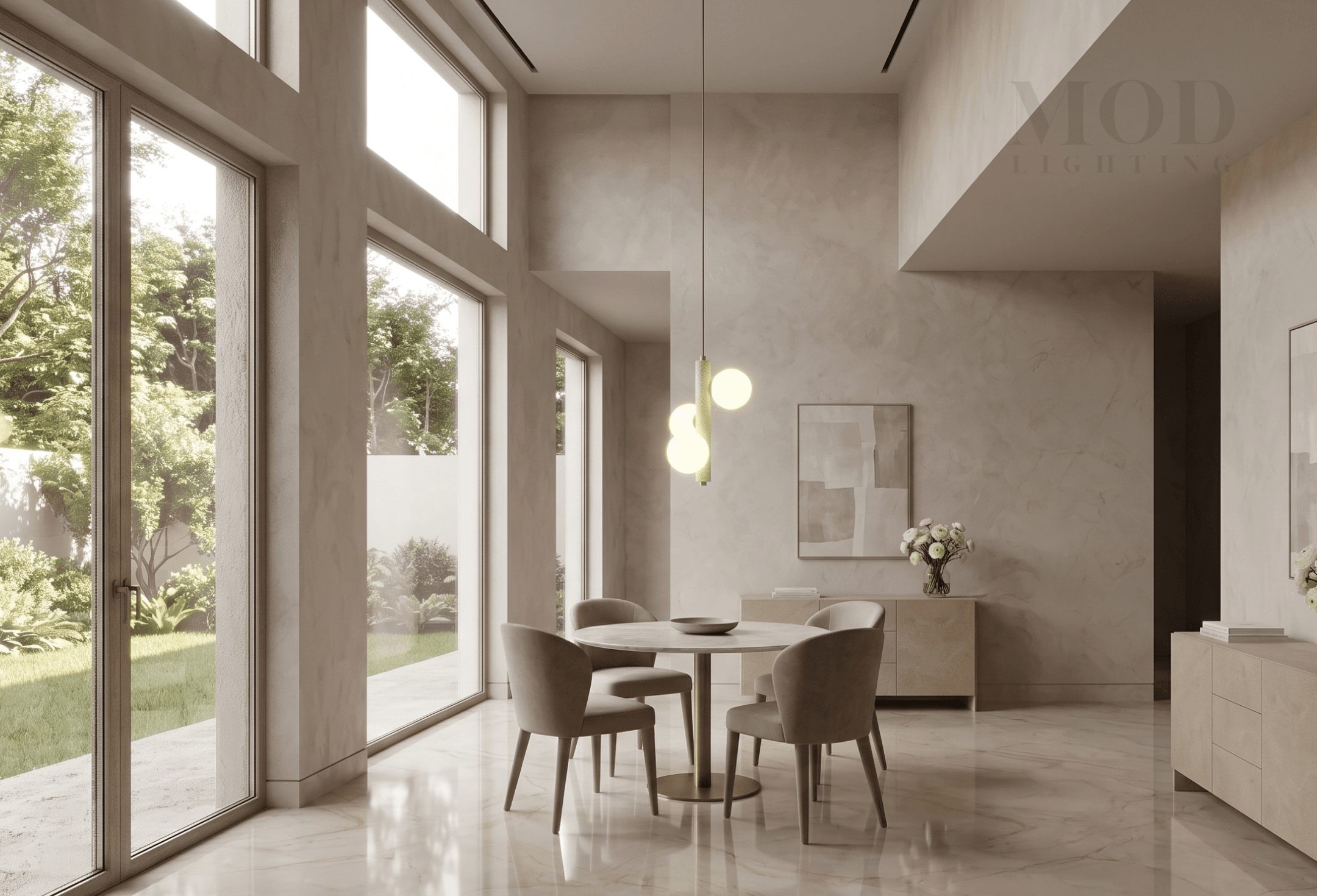
For a single statement pendant over a breakfast nook table or a small side table, choose a fixture roughly one third to one half the width of the surface below it. A 30-inch round table pairs comfortably with a pendant in the 10 to 15-inch range; going larger starts to compete with the table itself rather than complementing it.
Multi-light and linear pendants
For islands and longer tables, the sizing question becomes as much about count and spacing as it does about individual fixture diameter. MOD's kitchen guide recommends individual pendant diameters between one fifth and one third of island width, with 24 to 30 inches of spacing between fixture centers on a two or three-pendant layout. The same spacing logic applies to a dining table lit with multiple pendants rather than a single chandelier. See the full kitchen pendant sizing guide for the complete formula and a worked example.
Bedside and reading pendants
A bedside pendant should hang clear of the pillow line and sit roughly 24 to 30 inches from the mattress edge, with the shade itself compact enough not to interfere with sitting up in bed. Smaller single pendants like Diana or Kinsley work well in this role because their scale reads as a fixture rather than a hazard.
Once you have a target size in mind, browse the MOD pendant lighting collection and filter by size and finish to shortlist options.
How High to Hang a Pendant Light
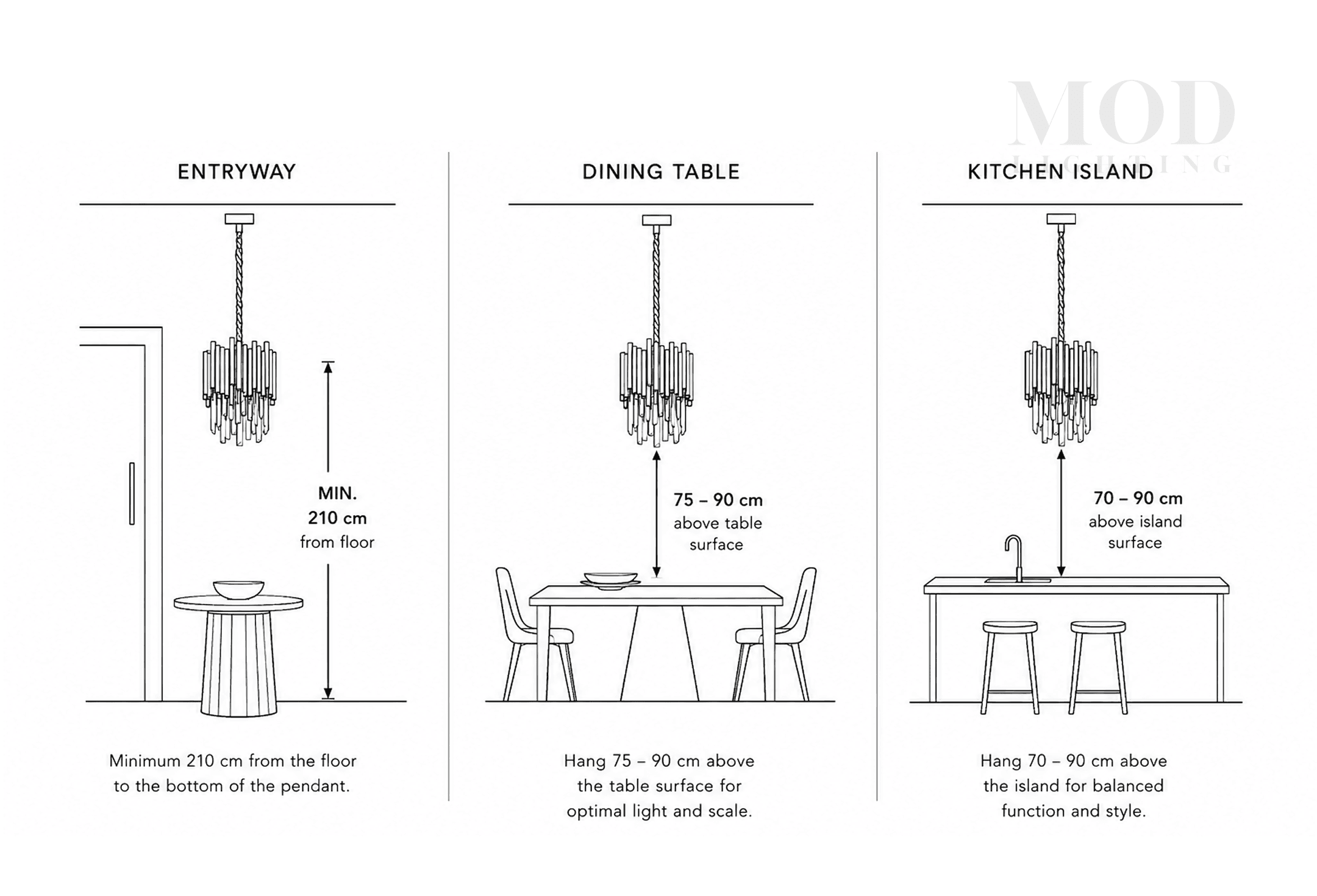
Hanging height depends entirely on what sits beneath the pendant and how the space around it gets used. A fixture that's perfectly placed over a dining table would be a hazard over a walkway, and vice versa.
| Application | Hanging Height Guidance |
|---|---|
| Over a dining table | 30–36 inches above the tabletop on a standard 8–9ft ceiling |
| Over a kitchen island | 70–80cm (about 28–32 inches) above the countertop |
| Beside a bed | Shade bottom at or just below eye level when seated; clear of the pillow |
| In an entryway | High enough to clear head height; scale up for double-height foyers |
| Over a walkway or open floor | Minimum 80 inches (6'8") from the floor to the shade bottom |
For ceilings above 9 feet, add roughly 3 inches of drop for every additional foot of ceiling height so the fixture stays visually anchored to the surface below it rather than floating in the space above. Our dining room chandelier guide covers the same principle in more depth if you're comparing a pendant against a chandelier for a dining table.
Light Output and Color Temperature
How much light a pendant needs to produce depends on its job. A pendant serving as the sole task light over a work surface needs meaningfully more output than one serving a purely ambient or accent role in a room with other light sources. For task-oriented pendants, such as those over a kitchen counter or a desk, look for fixtures rated toward the higher end of their category, and plan on layering in additional lighting, such as under-cabinet or recessed fixtures, rather than asking a single pendant to do all the work. For ambient or accent pendants, a lower output paired with a dimmer gives more flexibility than a single fixed brightness. Color temperature should be warm white, in the 2700K to 3000K range, for nearly every pendant application in a home. Cooler temperatures above 3500K are better reserved for strictly functional task zones, since warm light is what makes a room, and the people in it, look their best.
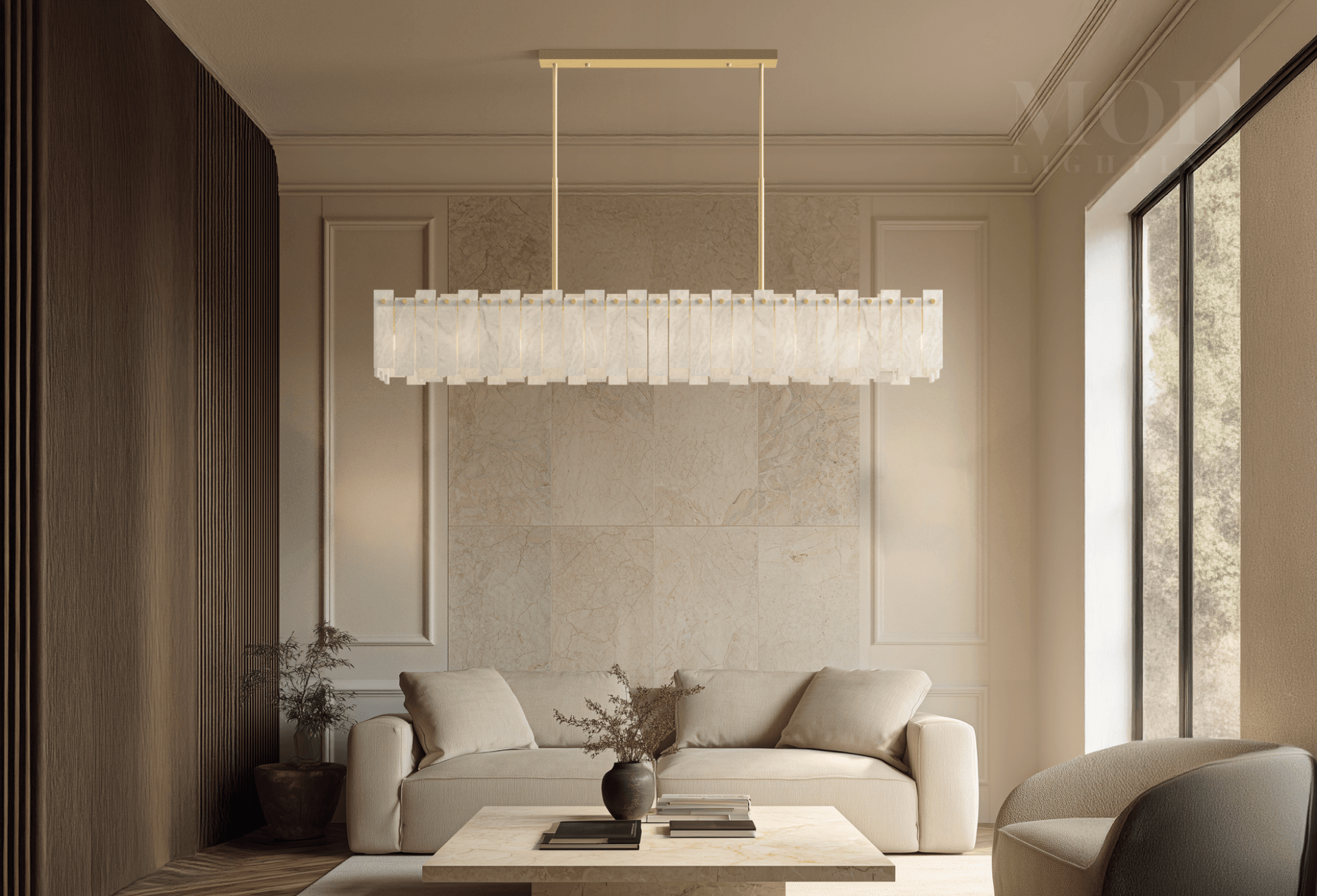
The Weight Test: Single Statement vs. Cluster
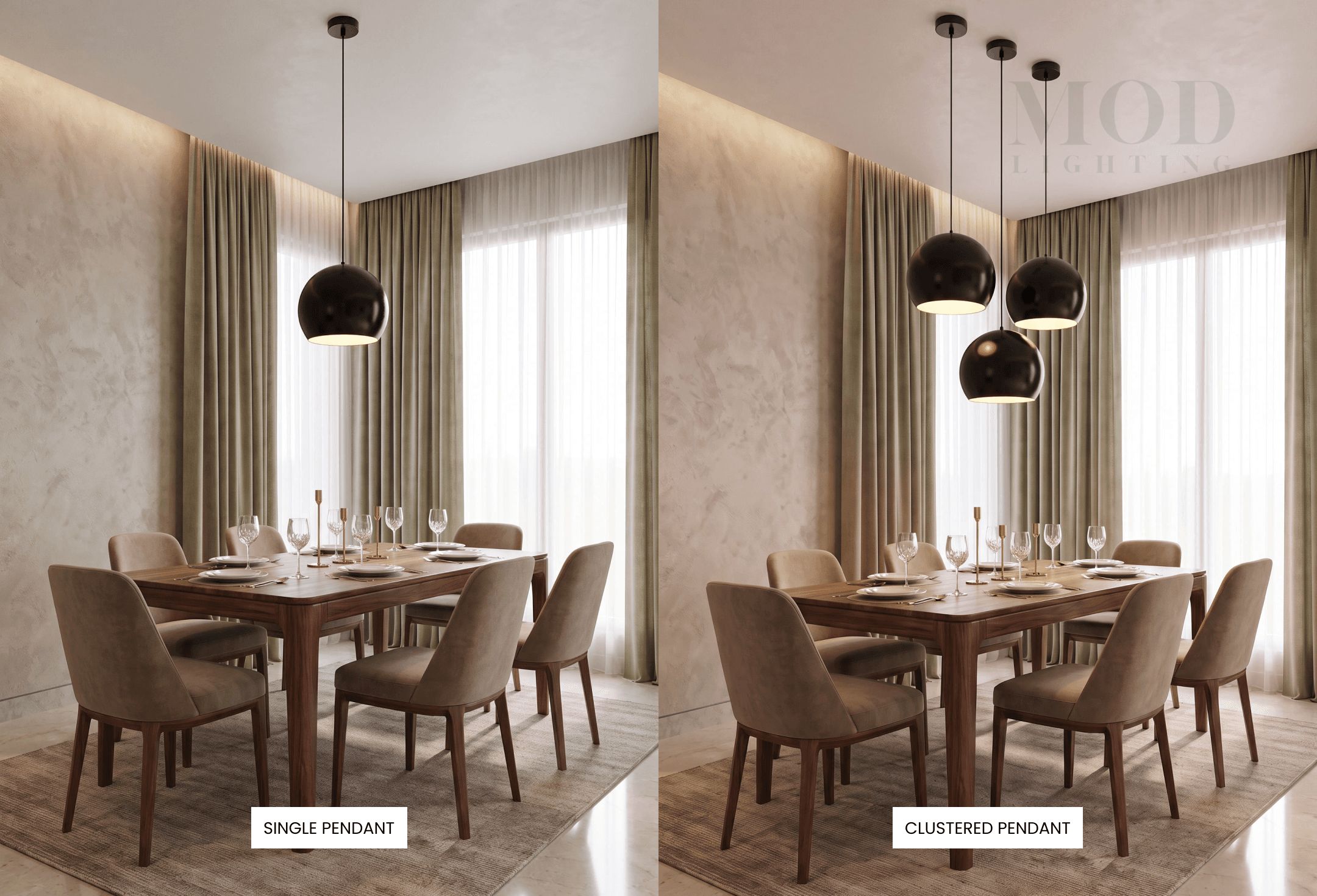
The most consequential decision in pendant lighting isn't style, it's whether to use one fixture or several. A useful way to decide is what we call the weight test: does the surface below need one object with real visual presence, or does it need light distributed evenly across its length? A round breakfast table or a nightstand almost always wants one pendant with genuine scale and character, like Sylas or Mini Obsidian Pendant. A long island or an extended dining table almost always wants a cluster or linear arrangement, because a single fixture large enough to visually anchor that much surface would overwhelm the room. Getting this decision backward, a single small pendant stretched to cover a large surface, or a crowded cluster over a small one, is one of the most common and most visible pendant lighting mistakes. Decide on weight and distribution before choosing a specific fixture, not after.
Choosing Style and Finish
Pendant finish should relate to the other metals already in the room: cabinet hardware, faucet finish, and any visible structural metalwork. A consistent or deliberately complementary metal story reads as intentional; a mismatched one reads as accidental. Within MOD's range, brushed gold options like Jewels & Pearls suit warmer, more traditional interiors, while matte black and aluminum pieces like Wavey suit contemporary and minimalist spaces.
If a pendant on its own doesn't provide enough visual presence for a large or formal room, a chandelier may be the better fit. Browse the MOD modern chandelier collection for fixtures with more scale and ornamentation than a typical pendant offers.
Dimming, Controls, and Power
A dimmer switch is worth installing on nearly any pendant that isn't purely functional task lighting. It's the difference between a fixture with one setting and a fixture that can move between bright and functional, and low and atmospheric, depending on the time of day and the occasion.
Power source is also worth confirming before you buy. Hardwired pendants are more design-friendly and sit flush against the ceiling, but they require an electrician or existing wiring. Plug-in pendants are easier to install and better suited to renters or rooms without existing ceiling wiring, though the visible cord is a design tradeoff worth considering before committing to a style.
Common Mistakes to Avoid
Sizing the pendant to the room instead of the surface
A pendant should be sized against the table, counter, or nightstand directly beneath it, not the overall square footage of the room. This is the single most common sizing error.
Hanging too high
A pendant installed too close to the ceiling loses its visual and functional connection to the surface it's meant to light. If in doubt, size toward the lower end of the height ranges above rather than the higher end.
Choosing a cluster when one fixture would do
Multiple small pendants crowded above a modest surface often look busier and less resolved than one well-chosen statement piece. Apply the weight test above before defaulting to a cluster.
Ignoring finish consistency
A pendant that looks beautiful in isolation but clashes with the room's existing hardware and fixtures will always read as a mismatch, regardless of how well-made the fixture itself is.
Skipping the dimmer
A pendant without dimming capability has a single mode, which is a real limitation in any room used for more than one type of activity throughout the day.
Final Buying Checklist
- I know which of the six pendant types fits the job I need it to do
- I've sized the pendant to the surface beneath it, not the room
- I've confirmed the correct hanging height for this application
- For multi-light or island setups, I've planned spacing between fixtures
- The finish is consistent with other metals already in the room
- The color temperature is warm white, 2700K to 3000K
- The fixture is dimmer-compatible and a dimmer will be installed
- I've confirmed hardwired vs. plug-in based on my installation
Final Thoughts
Pendant lighting rewards a sequence: decide what job the fixture needs to do, size it to the surface below, confirm the height, and only then choose style and finish. Skipping straight to style is how most pendant lighting mistakes happen. If you're shopping specifically for a kitchen island, our kitchen pendant lighting guide has the detailed spacing formula; for a dining table chandelier comparison, see our dining room chandelier guide. When you're ready to shop, browse the full MOD pendant lighting collection for current fixtures, dimensions, and finishes.
Still need help?
Available Monday to Friday, 9:00 AM - 8:00 PM EST.
Call us
1-888-988-4317Chat with us
Chat NowFrequently Asked Questions
Size the pendant against the surface it hangs over, not the room. For a single pendant over a small table, aim for roughly one third to one half the table's width. For islands or longer tables, sizing shifts to a per-fixture diameter plus spacing calculation.
Still need help?
Available Monday to Friday, 9:00 AM - 8:00 PM EST.